
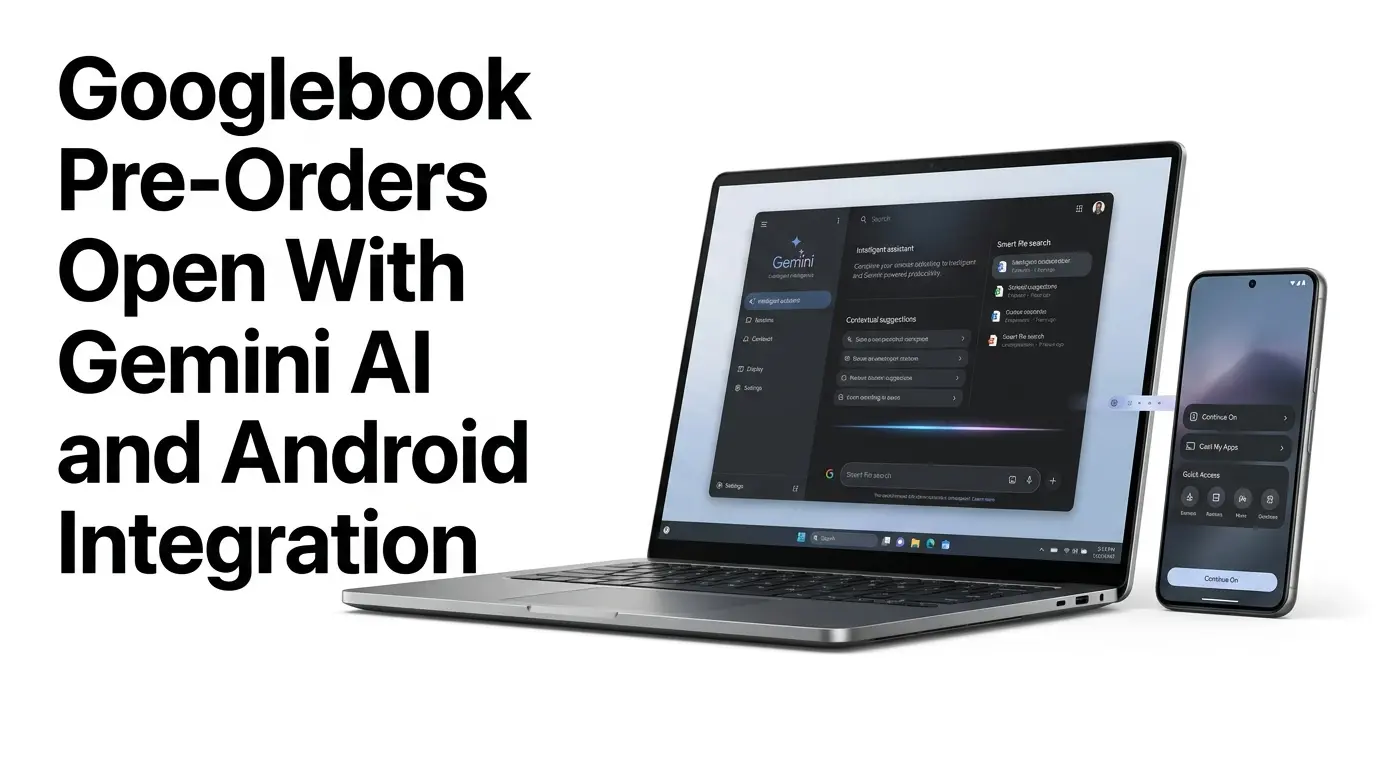
Google has opened pre-orders for Googlebook, its new category of laptops designed around Gemini AI and deeper integration with Android phones. The first Googlebook devices start at $899 and are being produced by Acer, ASUS, Dell, HP and Lenovo, with retail availability scheduled for October.
Google first introduced Googlebook in May as a new type of laptop combining elements of its ChromeOS and Android technology stacks. The company is now moving from an initial preview to actual hardware, positioning Googlebook as a premium laptop platform built around AI, Android applications and cross-device continuity.
The launch is notable because Google is not simply introducing another Chromebook. Googlebook is intended to create a higher-end computing experience in which Gemini is integrated directly into the desktop environment and Android phones work as a connected extension of the laptop.
Googlebook Pre-Orders Start at $899
The Googlebook lineup is available for pre-order starting at $899, according to Google’s current product site. The first wave includes hardware from five manufacturers: Acer, ASUS, Dell, HP and Lenovo.
The devices are positioned as premium laptops rather than conventional budget-oriented Chromebooks. Google lists configurations starting with 16GB of RAM and 256GB of storage, with processors including Intel Core Ultra and Qualcomm Snapdragon X Elite.
Google also says Googlebooks weigh under 2.85 pounds and can deliver up to 14 hours of battery life under its controlled video-playback testing. Actual battery life will vary depending on usage and other conditions.
Display specifications vary between models, with the lineup reaching resolutions of up to 2.8K and including touchscreen panels. Current reporting indicates that both LCD and OLED options are available across the range rather than every Googlebook using a 2.8K OLED panel.
Quick summary
- Googlebook is Google’s new laptop category built around Gemini Intelligence.
- Pre-orders start at $899.
- It combines elements of ChromeOS and Android.
- Gemini features include proactive assistance, Magic Pointer, Rambler and smart file search.
- Android integration enables features such as Cast My Apps, Continue On and Quick Access.
- Hardware includes Intel Core Ultra and Snapdragon X Elite options.
- Google lists up to 14 hours of battery life, depending on usage and configuration.
Gemini Is at the Center of Googlebook
Google is positioning Gemini Intelligence as one of the defining characteristics of Googlebook.
One of the most distinctive features is Magic Pointer. Moving the pointer can activate Gemini and allow users to select content on the screen for actions such as asking questions, creating content or comparing information.
Google is also introducing Rambler, a Gemini-powered voice feature designed to clean up spoken input by removing filler words and adding formatting. The company says users can speak naturally, review the resulting text and then send it.
The system also provides proactive assistance based on what is displayed on the laptop. Google says Gemini can surface suggestions based on the user’s current activity, while smart file search can identify files and photos based on their content rather than relying only on filenames.
Another feature extends Gemini beyond an open laptop. Google says an agent in the Gemini app can continue working on tasks even when the laptop is closed, expanding the role of AI beyond traditional desktop assistance.
Googlebook Connects Directly With Android Phones
Android integration is another major part of the Googlebook strategy.
With Cast My Apps, users can open compatible applications from their Android phone directly on the laptop. Google also offers Continue On, which allows a task started on an Android phone to continue on Googlebook.
The platform also includes Quick Access, allowing users to find files from their Android phone through the Googlebook file browser without manually transferring them first. Google says Android 17 or newer is required for these phone-integration features.
This creates a more continuous workflow between mobile and desktop devices. Instead of treating the phone and laptop as separate computing environments, Googlebook is designed to let users move applications, tasks and files between them.
Googlebook Goes Beyond the Traditional Chromebook
Google describes Googlebook as a new category rather than simply another Chromebook. Its earlier announcement described the platform as combining Android’s application ecosystem with the desktop capabilities associated with ChromeOS.
The current Googlebook platform provides access to millions of applications through Google Play, alongside desktop productivity and creative software. Google also highlights support for applications such as Gemini, Google Drive, Gmail, Google Docs, Photoshop, Lightroom, Canva, CapCut and other software.
Gaming is also part of the platform, with Android games available through Google Play and cloud gaming support through GeForce NOW for supported titles.
The hardware itself follows a more premium design direction. Google lists aluminum, magnesium and carbon fiber among the materials used across the lineup, while devices include backlit keyboards, large glass trackpads and biometric authentication through fingerprint or facial recognition depending on the model.
A New Hardware Strategy Around Gemini
The Googlebook launch represents a broader change in how Google is approaching laptops.
Google’s original announcement argued that the company could rethink the laptop around an “intelligence system” rather than treating the operating system as the primary foundation. Googlebook puts that idea into hardware by combining Gemini capabilities, Android connectivity, desktop applications and AI-assisted interactions in the same platform.
The first generation is also being built through Google’s established hardware partners rather than through a single Google-manufactured laptop. Acer, ASUS, Dell, HP and Lenovo are responsible for the initial devices, giving the platform a broader hardware footprint from launch.
For users already invested in Android and Gemini, the appeal is therefore not limited to laptop hardware. The more significant part of Googlebook is the attempt to make AI assistance and phone-to-PC continuity fundamental parts of the computing experience.
With Googlebook pre-orders now open from $899, Google is moving its Gemini-focused laptop strategy from an early product preview into the commercial market. The first devices will provide a clearer test of whether Google’s combination of AI features, Android integration and premium hardware can establish Googlebook as a distinct category alongside traditional Chromebooks and Windows and Mac laptops.
Also Read –
Gemini for Business NotebookLM Integration Explained
Gemini Enterprise: AI Search & Workflow Platform for Businesses
Source
Googlebook official product page
Google: Introducing Googlebook