
Mistral AI is changing from a model service to an all-in-one AI platform. The appearance of an integrated workflow builder is a clear indication of the direction in which it is heading. As organisations move away from one-prompt tests to ready-to-use AI platforms, having the capability to control multi-step workflows becomes vital. Through the introduction of a workflow creator, which is currently available as a beta version, Mistral is addressing a crucial gap between the raw model access and the real-world demands for automation. This is in line with the increasing need for AI tools that are not just efficient but also well-organised and reusable. It is also easier to operate at scale.
In this article, we will explore the Mistral AI Workflow Builder, its current beta status, key features, and what it means for developers and enterprises using the Mistral AI platform.
What Is the Workflow Builder?
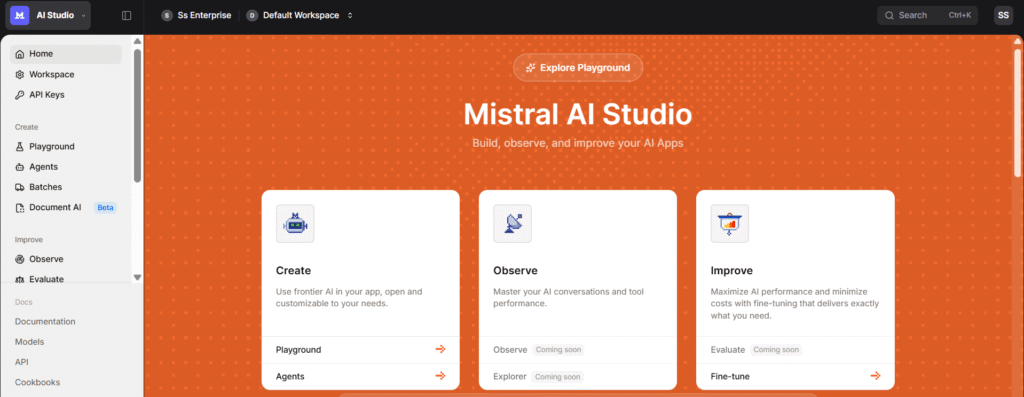
The new built-in workflow tool is a tool for users currently listed as “beta” in the Mistral sidebar on the Mistral platform. Although the official documentation of Mistral has not yet provided details about the feature, early indications suggest that the workflow builder can allow users to:
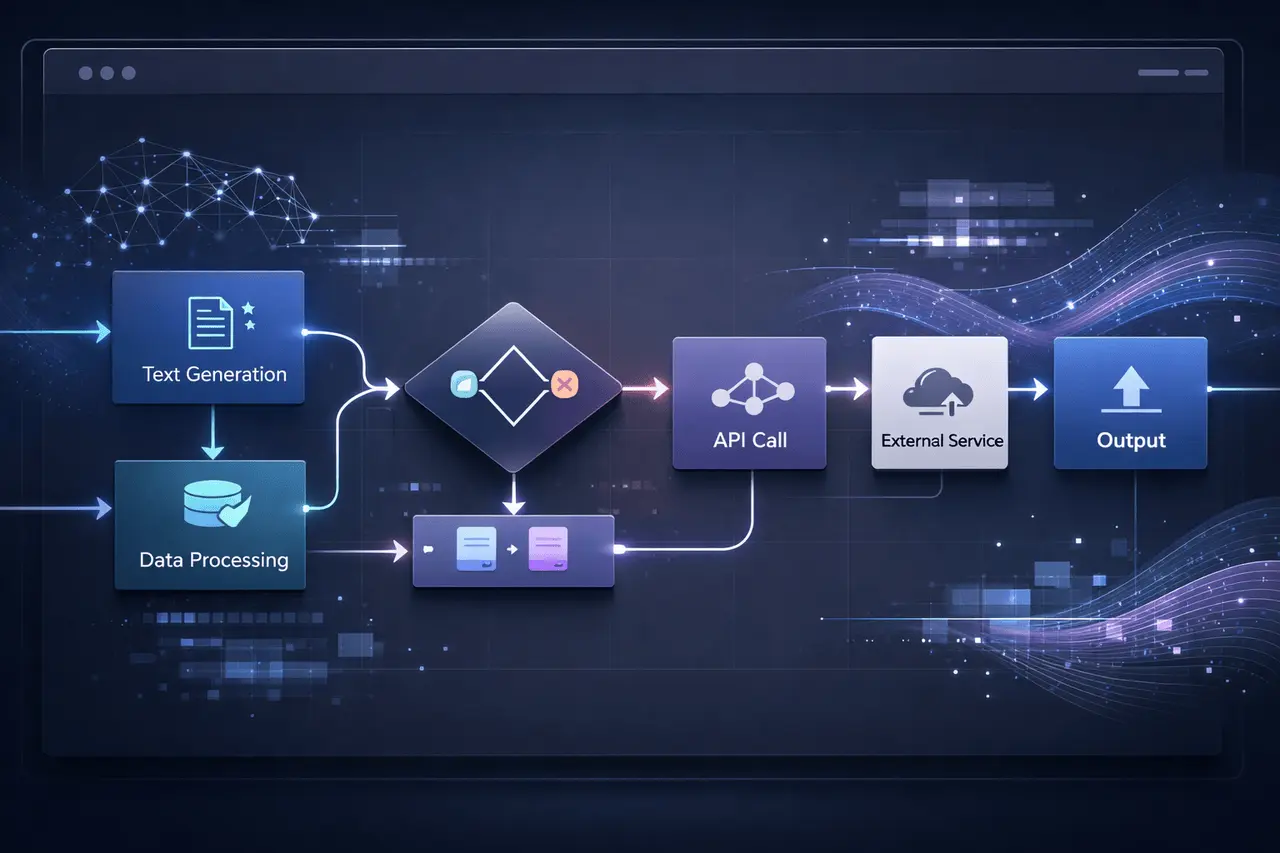
- Perform Multi-Step Choreography AI-Related jobs: The Choreograph is a multi-step task that AI can perform. Link actions, models, decisions, and calls to create a seamless procedure.
- Include Branching Logic: Add branching logic. Create conditional flows to ensure that outputs from one stage determine the next steps.
- Reuse Workflows Across Different Projects: save and then apply automatizations that are repeatable instead of building from scratch.
By defining AI tasks into modular, visually or scriptable workflows, the builder can aid teams in automating typical use situations like document processing, help ticket triage, data extraction, and pipelines of content. It goes beyond simple agents or single agent-specific calls to a more holistic approach to automation.
This kind of feature brings Mistral closer to AI orchestration systems that allow team members and developers to create series that incorporate AI logic, connect with other systems, and control complex automation, with no bespoke code for every usage.
Connectors: Modular Integrations for the Ecosystem
In addition to the builder for workflows, Mistral is testing the Connectors part of the platform. Connectors will likely be reusable integrations for external data sources and services such as cloud storage, SaaS applications, and databases. These can later be connected to workflows.
This modular design echoes the broader trends in the field of enterprise AI tools:
- Connectors simplify integration by abstracting APIs into reusable blocks.
- They aid in bridging AI capabilities to real-world systems such as CRMs, ticketing platforms or file systems.
- In conjunction with workflow, the connectors enable end-to-end automation to be both practical and easily manageable.
For businesses that have traditionally used middleware or custom-written code to automate Mistral’s connectors, it might offer the possibility of a more straightforward way to go.
Why the Workflow Builder Matters?
1. Accelerated AI Adoption
AI workflows may be a hurdle for teams with limited resources for engineering or those who have specialised expertise. A native builder of workflows makes automation by giving users the ability to design complex AI-driven processes either visually or using the low-code setting.
Workflows can be used to perform tasks like:
- Parsing and categorising large volumes of text.
- Routing queries to different AI models depending on context.
- Invoking follow-on actions based on the results of the analysis.
This is in line with the larger enterprise trend towards automation of workflows and AI orchestration, which can improve efficiency and decrease operational friction.
2. Enhanced Productivity and Repeatability
Through allowing groups to reuse and save workflows, the Mistral tool promotes scalability and standardisation. Instead of writing similar AI algorithms across projects, organisations can implement established workflows over and over again, which will ensure the same results.
3. Native Integration into Mistral’s Ecosystem
Because this workflow creator is embedded into Mistral, it is a part of the Mistral platform, and it can effortlessly make use of:
- Agent models and Mistral tools
- External system connectors
- Governance and observability capabilities in AI Studio. AI Studio
It provides users with the unification of tools and oversight from concept to implementation.
How Does the Builder Fit Into Mistral’s Strategy?
Mistral’s overall 2025 strategy for its products has been focused on moving past simple APIs for models to create an extensive AI infrastructure. Its AI Studio product combines the concepts of observability, registry, and runtime, and more recently workflows to provide an enterprise-grade environment for creating, as well as orchestrating and governing AI systems.
By improving La Plateforme and Studio with a connector and workflow tools, Mistral is pushing toward:
- A more end-to-end development experience for AI applications.
- Built-in support for agent orchestration and automation.
- Tools that reduce barriers for teams that aren’t in the traditional engineering of software.
It is a reflection of the macro trends in technology that generative AI tools see companies moving away from model access that is isolated to an integrated, customer-centric AI platform.
Mistral AI Workflow Builder: Potential Use Cases
While the beta workflow builder could change before it’s an official launch, here are a few possible scenarios in which it could be of value:
- Customer Support Automation: Forward inquiries to agents, review tickets, and send replies to assist desks.
- File and Data Pipelines: Take data from documents, use model analysis, and then store the results in databases.
- Content Generation Workflows: Draft drafts, run quality tests and then publish or distribute outputs systematically.
- Developer Toolchains: Integrate testing and model inference, as well as feedback loops, and logging within one pipeline.
In abstracting the complexity of these systems and encouraging reuse, workflows are able to increase the AI impact across all operational systems significantly.
Mistral AI Workflow Builder: Challenges and Considerations
Like every beta tool, several aspects are worth mentioning:
- Support and Maturity Features: They are marked “beta” and typically evolve quickly and might not have complete documentation when they first launch.
- Integration Complexity: Connectors are able to abstract APIs; the process of integrating with enterprise systems typically creates compliance, security, and governance requirements.
- Governance Controls: Since workflows get more autonomous, companies will require a robust system of security and monitoring to avoid misuse or mistakes.
Final Thoughts
The introduction of a workflow creator to Mistral’s platform may signal a significant shift in the way businesses and developers utilise its ecosystem. Instead of glueing together custom scripts and other automation tools, companies will soon be able to create and deploy AI-driven workflows inside the Mistral platform. Together with connectors and capabilities of agents, this puts Mistral as a formidable competitor in the AI automation and orchestration.
While the feature is in the beta stage and details could be altered, its presence illustrates the broader strategy of Mistral, which is to enable the entire process of AI application development, rather than an isolated model use. If implemented correctly, the workflow builder will dramatically reduce the hurdle to creating scalable, repeatable AI systems, which makes Mistral’s platform attractive to businesses looking for efficient, ready-to-use AI solutions.
Frequently Asked Questions
1. What exactly is the Mistral AI workflow builder?
It’s an upcoming feature on Mistral’s platform, which allows users to design automatic sequences of AI tasks which incorporate branching logic as well as reuse across different projects. The builder is available in beta.
2. How does the workflow builder improve AI automation capabilities?
With the ability to support the multi-step task chaining process and an extensible design system, the creator makes the development of complicated AI pipelines possible without any customised code.
3. What are connectors, and why are they so important?
Connectors can be used to connect external systems and services that could be integrated into workflows, simplifying the process of connecting AI algorithms with actual data sources.
4. Does this feature work right now?
As of December 20, 2025, the workflow builder, as well as connectors, are available as a test feature, suggesting a gradual rollout instead of the full release for general availability.
5. Who benefits most from this tool?
Developers, teams in the enterprise and product managers working on reproducible AI-driven processes, specifically those that require automation across systems, will benefit greatly.
6. Will workflows integrate with other Mistral tools like agents?
With Mistral’s move toward unifying tooling in AI Studio workflows, it is expected to integrate with models, APIs for agents and connectors as part of a larger orchestration ecosystem.
Also Read –
MiniMax M2.1 Open Source: SOTA AI Model for Developers
MiniMax M2.1 vs Opus 4.5 vs GLM-4.7: A Comparison (2026)
MiniMax M2.1: Open-Source AI Model for Coding and Agents