
The launch of Grok 4.1 is a significant moment in the development of AI capable of communicating. It is designed to reduce the friction between user input and the system’s response. The model provides near-instant responses, predictive inference, improved emotional intelligence, and greater reasoning capabilities. Through combining blazing speed with an intuitive, natural interface, Grok 4.1 is pushing AI interactions closer to live dialog, something earlier chatbots could only approximate.
Since the lines between thinking, typing, and receiving information blur and the interface becomes more fluid, this update signals a shift towards AI systems that can anticipate user requirements rather than react to them.
What is Grok 4.1, and why does it matter?
Grok 4.1 is the latest version of the AI system for conversation created by xAI and launched on the November 2025.
This upgrade is a massive increase in speed, usability, and conversation quality, going beyond incremental changes to redefine how people engage with AI. By integrating fast-response and thinking modes, Grok 4.1 gives users a variety of options: immediate responses to simple questions and deeper analysis for more complex ones.
For those who are already making use of AI chatbots – whether to write, brainstorm, or for research Grok 4.1 will reduce friction between the intent and the result.
Key Upgrades in Grok 4.1
Instant and Predictive Responses for Simple Queries
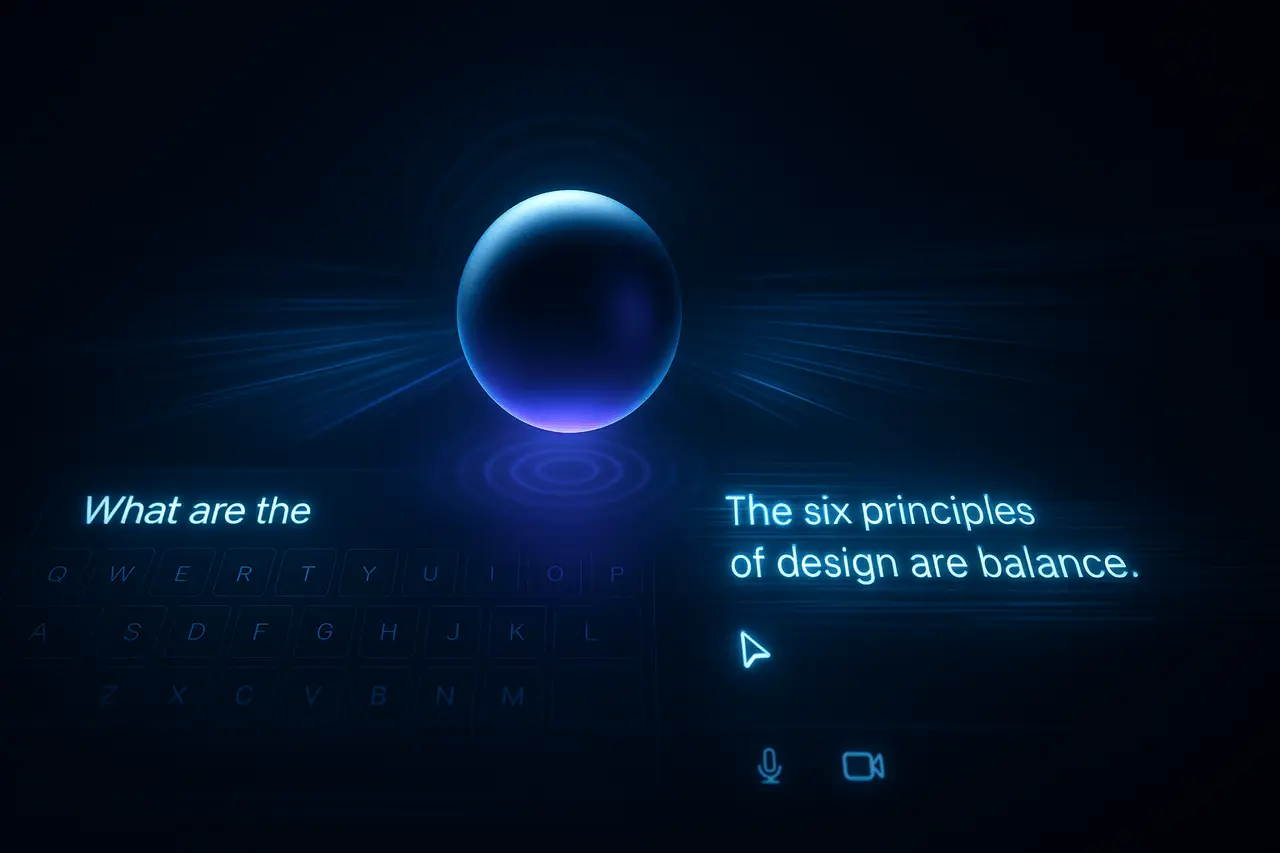
A significant improvement in Grok 4.1 is the drastic reduction in response time. In fast mode, Grok often responds almost immediately after the user has completed typing, and often before the user presses Enter, in the initial demonstrations.
This ability to respond is due to the model’s predictive inference and caching, which allows it to anticipate more fact-based queries and provide immediate responses.
The result is that users can interact in near real time, making the chatbot feel more natural and conversational.
Balanced Modes: Fast or Thoughtful
Grok 4.1 is available in two major options:
- Rapid (low-latency) mode -to provide quick and accurate responses or for conversational tasks.
- The Thinking (deep-reasoning) mode is used when the complexity requires multi-step reasoning, retention of context, or innovative problem-solving.
This dual-mode configuration lets the model provide fast or complete outputs, depending on the user’s needs.
Improved Conversational Quality & Emotional Intelligence
The new model has been designed better to suit tone, personality, and emotional awareness, dramatically improving conversational flow and the user experience.
Compared to previous versions, tests of user preferences favor Grok 4.1 64.78 percent of the time.
Furthermore, hallucination, a tendency for AI models to create false or inaccurate statements of factual accuracy, has significantly decreased during normal usage.
Strong Tool-Calling, Long-Form Reasoning & API Support
Grok 4.1 Fast is not just designed for chat; it has a context window of 2 million tokens and also supports tool-calling via the Agent Tools API.
This allows it to be used for complex tasks such as continuous research and data processing, customer service automation, and multi-step workflows, giving power users new capabilities beyond simple Q&A.
How Grok 4.1 Compares to Other Leading Models?
At the time of its launch, Grok 4.1 earned a high ranking on various industry leaderboards, as well as on the benchmarking t tools often used to test the performance of generative models.
In head-to-head comparisons to other models that excel in creativity in writing, nuance in conversation, and emotional engagement, Grok 4.1 has been found to outperform competitors. T
While its strengths shine through in reasoning, writing, and conversational fluidity, specific areas, such as high-tech coding or difficult mathematical problem-solving, remain where specialized models could still be beneficial.
What Grok 4.1 Means for Everyday Users?
- Faster and more natural chats: For general chats, fact-checking, or general inquiries, Grok 4.1 is almost instantaneous, increasing the amount of interaction.
- Improved support for writing and creative work: Thanks to an enhanced emotional intelligence, tone, and retention of context, Grok 4.1 creates more cohesive text, with a human feel that is ideal for drafting and brainstorming as well as the creation of content.
- Practical reasoning and support for research: With large context windows as well as APIs for calling tools, Grok 4.1 is more effective for more complex tasks such as research summary, data analysis, and multiple-step workflows.
- Lower chance of false or misleading responses: Lower hallucination rates mean that outputs are generally more accurate and solid, even though there is no guarantee that AI can be perfect.
Grok 4.1: Limitations & Considerations
Like every AI system, Grok 4.1 isn’t perfect. Some crucial limitations remain:
- In extremely mathematical, technical, or code-intensive jobs, particularly those that require specific expertise in a particular area, specialized tools can still be superior to the standard.
- Although hallucinations are reduced, none of the models, even Grok 4.1 c—, can reach 100 percent accuracy. Be cautious when utilizing AI outputs to make critical or possibly sensitive decisions.
- Rapid response time can cause consumers to excessively rely on instant answers when more reasoning or verification could be necessary.
Why Speed and Anticipation Matter?
The most intriguing feature of Grok 4.1 is its capacity to anticipate user inquiries and respond in a flash. In an age when attention spans are limited and impatience is high, such immediate feedback can be the difference between frustration and smooth, efficient work.
Beyond just velocity, the dual-mode design (fast and thinking) allows the system to meet the user’s needs: fast for easy tasks, but attentive for more difficult ones. This kind of balance is uncommon in chatbots that use generative AI, and is a sign of the future in which AI appears more like a natural partner rather than a machine waiting for commands.
What This Means for the Future of AI Chat?
Grok 4.1’s release is much more than an incremental update; it demonstrates a significant increase in the sophistication of generative AI design. When models are aware of context, emotionally intelligent, and equipped to use tools, they are beginning to blur the distinction between static and dynamic collaborators. For the user, it could be AI that aids in research, writing, code, and creative work, or even complicated workflows- all through a single chat interface.
Naturally, with greater authority comes greater accountability, as adoption rates increase and the need for rigorous supervision, transparent evaluation, and ethical guidelines grows.
Final Thoughts
Grok 4.1 illustrates how fast AI for conversation is moving towards an intuitive, fluid interaction. The combination of immediate responses, more sophisticated reasoning, and a higher level of reliability showcases the model that was not designed for precision but to provide users with a better experience. Although no AI model is perfect, the dramatic reduction in hallucinations, along with improvements in understanding context, make Grok 4.1 an effective tool for ordinary users, both creators and professionals.
As emotionally aware and predictive AI becomes more prevalent, such updates pave the way for interfaces that can be much more human and like partners. Grok 4.1 offers a glimpse of the future: quick, flexible, and more human in its design.
Frequently Asked Questions
1. What kinds of tasks is Grok 4.1 particularly good at?
Grok 4.1 excels at conversations and creative writing, as well as drafting reports and research synthesis, especially when the context spans several turns or involves emotional specificity.
2. Is Grok 4.1 always accurate?
No. Although the software has drastically reduced the number of hallucinations it produces compared to earlier versions, it’s still possible to make errors. Always confirm important information, especially when handling high-risk tasks.
3. Can developers use Grok 4.1 for automated workflows or tool-driven tasks?
Yes, through The Grok 4.1 Fast version as well as using the Agent Tools API, which can be used to support long-context workflows as well as remote code execution, and many other agent tasks.
4. Which mode should a user choose “fast” or “thinking”?
Utilize fast for short, simple questions or for conversational tasks. Think when you require more sophisticated analysis, multi-step logic, or a deeper understanding of context.
5. How does Grok 4.1 compare to other AI models like Gemini or Claude?
When it comes to tasks that focus on emotions, tone, creativity, and flow of conversation, Grok 4.1 has been reported to be superior to many of its competitors. If you require specialized programming or advanced mathematical calculations, a few competitors could still be ahead.
6. Can Grok 4.1 completely replace human judgment or fact-checking?
No. Although Grok 4.1 is more reliable and robust than previous versions, AI outputs should be considered supplementary and not a definitive source, particularly in fields that require strict accuracy or professional judgment.
Also Read –
Grok Instant Answers: How xAI Is Transforming Real-Time Search?
Grok App for Kids: A Safe, Playful Way to Learn Science and More
Grok 4.1 Fast Daily Token Usage: Soars to 334B on OpenRouter