
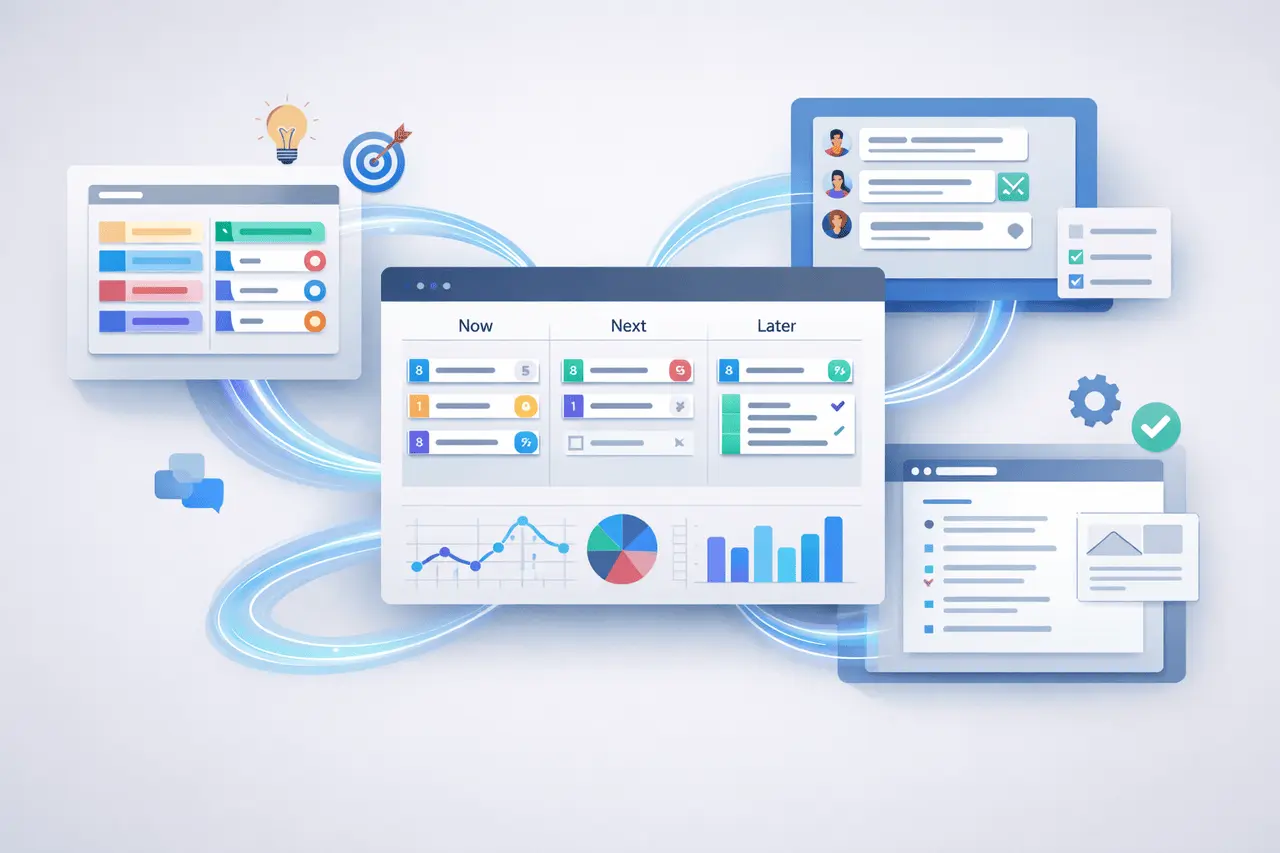
Product management is increasingly dependent on bringing together insights from different tools without losing momentum. This Manus Academy Course for the Product Manager class addresses this need by focusing on PM-specific applications that work across the modern product stack. Instead of individual classes, the course focuses on linked workflows that minimise context switching and transform day-to-day PM-related activities into systems that can be replicated.
This article explains the Manus Academy Product Manager course, the basics of the course: what it is about, how it works in practice, and what managers can expect to gain from it.
What Is the Manus Academy Product Manager Course?
The course is an education program by Manus Academy explicitly designed for Product Managers. Its main goal is to deliver practical PM-specific workflows that link standard tools such as product backlogs, document platforms, and team communication tools.
Instead of teaching general product theories, the course concentrates on the operational execution, which includes:
- Managing and prioritising backlogs across tools
- Creating consistent leadership updates
- Converting research inputs to defined product requirements
The focus lies on processes that reflect how product teams work.
Why This Course Matters for Modern Product Managers?
Increasing Tool Complexity
The majority of product teams use various platforms to plan, communicate, document, and execute. Moving between them manually can lead to delays, mistakes, and decision-making fatigue.
Demand for Execution-Focused PM Skills
Companies increasingly expect product managers to go beyond strategy and move into solid execution. This means:
- Translating qualitative research into actionable plans
- The ability to align stakeholders with the least amount of cost
- Maintaining prioritisation discipline over time
A course that is based on real workflows directly addresses these expectations.
How Does the Course Work in Practice?
This Product Manager course at Manus Academy is designed around the complete use case rather than isolated features. Each workflow illustrates how the PM task is initiated in one system and then flows to other systems without friction.
Example PM Workflows Covered
Backlog Prioritisation Across Tools
Product managers are taught the techniques to
- Items from the backlog that you can pull from a tracking system for products
- Apply structured prioritisation methods such as RICE
- Re-insert updated priorities into the record system
This reinforces data-driven decision-making while keeping tools synchronised.
Automated Leadership Updates
The course demonstrates how weekly or periodic updates can be produced through the aggregation of signals
- Team communication channels
- Documentation spaces
- Product tracking tools
It will reduce the need for manual reporting while increasing consistency.
PRD Drafting based on Research Inputs
Another goal is to transform the user’s research into product documentation. The workflow is connected to:
- Notifications of research as well as insight
- Existing product context
- Structured PRD templates
This results in faster documentation without losing any nuance.
Feature Overview: What Sets the Course Apart?
PM-Specific Use Cases
The course is free of typical automation examples. Each workflow is designed around the everyday PM tasks.
Cross-Tool Connectivity
Instead of educating each platform separately, the course focuses on how the tools interact as a whole.
Reduced Context Switching
By emphasising connected workflows, this course will help reduce repetitive manual processes that hinder PMs.
Feature Comparison Table
| Aspect | Traditional PM Approach | Manus Academy Course Approach |
|---|---|---|
| Backlog management | Manual updates across tools | Connected, workflow-based prioritization |
| Status reporting | Time-consuming manual summaries | Automated, aggregated updates |
| PRD creation | Separate research and drafting steps | Research-driven, integrated drafting |
| Tool usage | Siloed platforms | Cross-tool workflows |
Real-World Applications for Product Teams
Individual Product Managers
- Faster prioritisation decisions
- Clearer stakeholder communication
- Less time spent on manual coordination
Product Teams
- More consistent processes across PMs
- Workflows that are shared
- Increased transparency into the product’s decisions
Organizations
- More aligned between execution and strategy
- Lower operational overhead
- More reliable product delivery cycles
Benefits of the Manus Academy Product Manager Course
- Concentrate on the practical application instead of abstract theory
- Workflows are aligned to real PM responsibility
- Focus is on consistency and repeatability
- Applicability across various-sized teams of product
The advantages make this course especially pertinent for PMs operating in highly technical tool environments.
Limitations and Practical Considerations
The course is focused on real-world workflows that the participants have:
- Basic knowledge of product management
- Experience with the most common PM tools
- A dynamic product environment that allows you to apply concepts
Product managers seeking basic PM theory may encounter a course that is more focused on execution than on fundamentals.
Use Cases by PM Responsibility
| PM Responsibility | Course Use Case |
|---|---|
| Prioritization | Scoring and syncing backlog items |
| Stakeholder communication | Generating leadership updates |
| Product documentation | Drafting PRDs from research |
| Team alignment | Centralized, connected workflows |
My Final Thoughts
Manus Academy Product Manager course is an actual guide for PMs seeking to be more efficient in operating in an ever-changing toolscape. By focusing on specific use cases for PMs and cross-tool connectivity, the course addresses the issues of everyday execution rather than abstract frameworks.
For product managers who want to improve prioritisation, reporting, and documentation without compromising clarity, this course provides a methodical approach to modernising PM operations. Since product teams remain dependent on connected systems, learning based on workflows such as this will become a crucial element of professional training.
FAQs
1. What is the Manus Academy Product Manager course focused on?
It focuses on cross-tool PM-specific workflows that support real-time PM tasks such as priority setting, reporting, and documentation.
2. Does this course suit brand-new product managers?
It is best suited to PMs with a foundational understanding who are looking to improve the efficiency of their operations and execution.
3. Does the course include the actual PM tools?
Yes, the workflows are built around the most commonly used products and communication and documentation tools.
4. What can the course do to reduce the possibility of context switching?
Through the teaching of connected workflows that transfer information between tools, and the automation of repetitive manual tasks.
5. Are workflows able to be applied to other industries?
These workflows are based on role and tool, making them applicable to any industry where product management is employed.
Also Read –
Manus Agent Selection for Scheduled Tasks Explained
Manus Meeting Minutes: Turn Meetings Into Actionable Work