

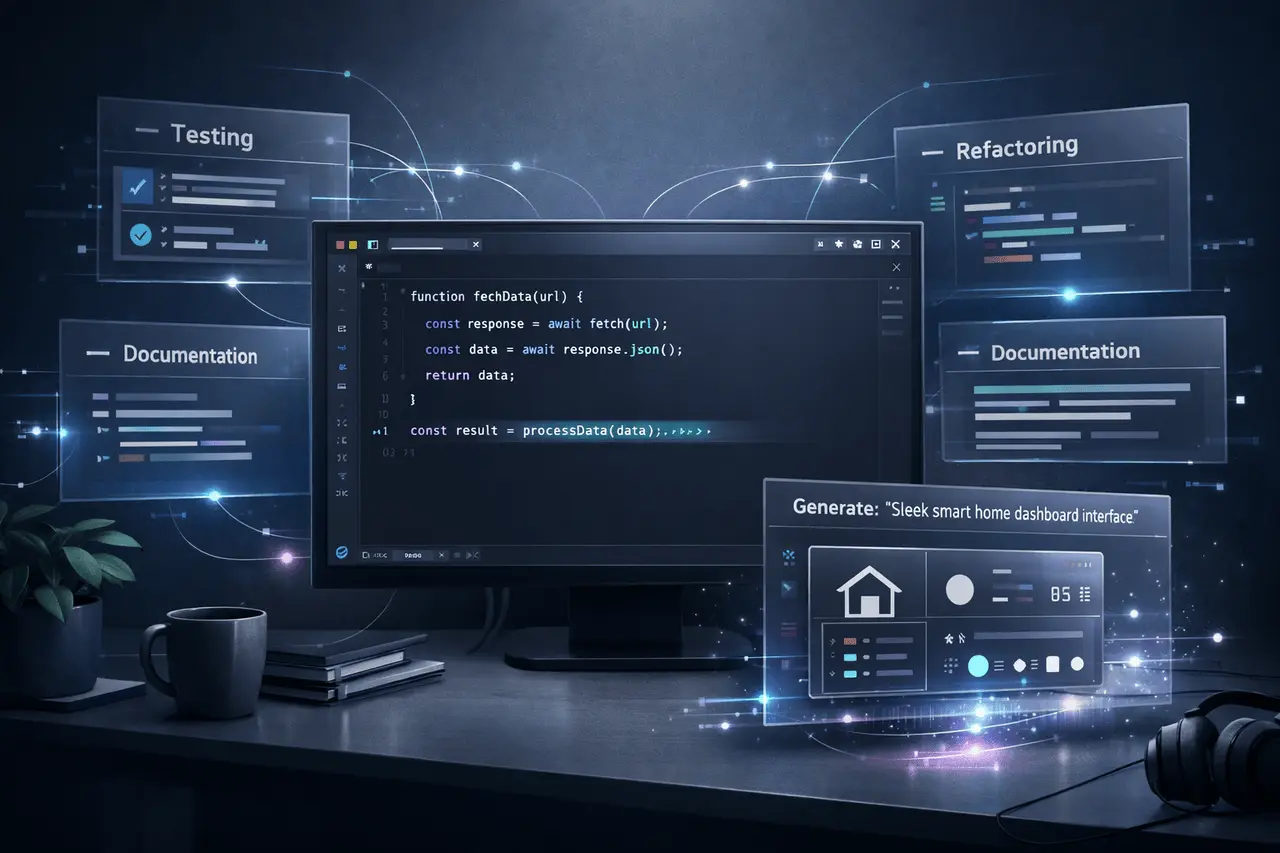
This Cursor 2.4 update is a significant progress in AI-assisted development. This update introduces Subagents, parallel, independently-configured AI workers, and the ability to generate images powered through Nano Banana Pro. Together, these features expand the ways developers can delegate tasks to manage context and speed up their work without losing control. In the days following the release, teams investigating new AI workflows have been focusing on how Subagents modify the coding process day-to-day and how image generation is integrated into modern development pipelines.
What’s new in the latest Cursor 2.4 Version?
Cursor 2.4 centres on two capabilities that were designed to increase productivity:
- Subagents that operate in parallel using isolated contexts and tools that can be configured.
- native image creation through Nano Banana Pro for visual assets and conception.
Both of these features are designed to work within the editor, helping reduce the risk of switching between contexts and ensuring consistent workflows.
Understanding Subagents in Cursor 2.4
What Are Subagents?
Subagents are autonomous AI agents that operate concurrently with the principal agent. Each Subagent has its own specific context and can be given customised prompts and access to particular models and tools. This design allows absolute parallelism, not just single-threaded, serial assistance.
How Subagents Work?
In Cursor 2.4, Subagents:
- Run in parallel, not sequentially.
- Use isolated contexts to help prevent cross-task contamination.
- Accept prompts that you have created, specifically designed to meet a particular goal.
- Support for selective access to tools, with limited access points such as code analysis or file operations.
- Let users select models, and let teams match on speed, cost, or capabilities.
This layout allows Subagents to handle specific, repetitive tasks that could otherwise disrupt a developer’s main flow.
Practical Use Cases for Subagents
Subagents shine when work can be broken down into concurrent streams. Common scenarios include:
- Codbase Analysis: The first subagent examines architectural problems, while another examines performance hotspots.
- Testing and Validation: Agents that are parallel create tests, check coverage and flag cases that are edge-related.
- Specification and Documentation: One agent creates README updates, and another updates comments on inline.
- Refactoring Support: Multiple Subagents propose refactors across different modules simultaneously.
By distributing work, developers can spend less time waiting and more time analysing results to inform decision-making.
Image Generation using Nano Banana Pro
What does Nano Banana Pro add to it?
Cursor 2.4 integrates image generation driven by Nano Banana Pro right into the editors. This allows developers to create visual objects without leaving their coding environment.
Supported use cases include:
- UX mockups and placeholders
- Diagrammatic representations of documentation
- Visual ideation during early product design
The focus lies on ease of use and workflow consistency rather than replacing full-scale design tools.
Feature Comparison: Before vs Cursor 2.4
| Capability | Before Cursor 2.4 | Cursor 2.4 |
|---|---|---|
| AI task execution | Single agent, sequential | Multiple Subagents in parallel |
| Context handling | Shared context | Isolated context per Subagent |
| Prompt customization | Global | Per Subagent |
| Tool access | Broad, shared | Configurable per Subagent |
| Image generation | External tools | Built-in via Nano Banana Pro |
This change underscores why Cursor 2.4 is more than just an incremental update. The cursor 2.4 upgrade is not just minor; it rethinks the way AI assistance is organised.
Is the Cursor 2.4 Update Important?
The Scale of Productivity
Parallel Subagents help reduce the bottlenecks. Teams can eliminate repetitive or exploratory tasks while focusing on more valuable decisions.
Better Control and Safety
Context isolation and configurable permissions can prevent accidental modifications. This is particularly important in large or sensitive repositories.
Reduced Context Switching
With the ability to generate images and integrate AI tasking into editors, designers can avoid switching between tools, keeping their focus on the primary task.
Limitations and considerations
Although strong, but not as powerful, Cursor 2.4 provides considerations teams should be aware of:
- Learn Curve: Successful Subagent usage requires thoughtful prompting and role creation.
- Resource Management: Utilising multiple agents concurrently can make the computer more efficient.
- It is not a Replacement for Review: The output of a subagent requires human validation.
Understanding the boundaries can help teams to adopt the update responsibly.
Implementing Cursor 2.4 in Team Workflows
To reap the maximum out of this Cursor 2.4 update:
- Begin by defining clearly defined Subagent tasks (e.g., “test generator,” “doc reviewer”).
- Utilise personal requests to be short and specific to the task.
- Limit access to the tool for Subagents who require it.
- Pilot image generation for documentation and mockups before broader use.
This practice aligns Subagents with existing development standards.
My Final Thoughts
Cursor 2.4 update introduces a modular, flexible approach to AI-assisted development. With Subagents operating in parallel and Nano Banana Pro image generation integrated into the Editor, designers can benefit from faster speeds, greater flexibility, and better workflow integration. As teams continue to adopt AI-based tools, features such as isolated contexts, customizable agents, and integrated images indicate a future where software development environments can manage intelligent collaborators, not single assistants, but keeping humans in the forefront.
FAQs on Cursor 2.4 Update
1. What is the main advantage of Subagents in Cursor 2.4?
Subagents allow parallel AI work in an isolated context, allowing several tasks to be run at the same time without interruption.
2. Can Subagents use different models?
Yes. Each Subagent can be configured by selecting a model based on the task’s requirements.
3. What exactly is Nano Banana Pro used for in Cursor 2.4?
Nano Banana Pro has built-in image generation that can be used to create diagrams, mockups and visual assets within editors.
4. Do Subagents have memory shared with the agent that is the primary?
No. Each Subagent has its own context that helps to maintain tasks separated and precise.
5. Does image generation have to be done to make use of Cursor 2.4?
No. Image generation is not required and is a possibility when visuals are of value.
Also Read –
Cursor 2.4 Update: Faster AI with Subagents