
Developers are increasingly relying on AI to write tests, refine code, and write code. Traditional AI tools typically operate in the cloud, raising concerns about privacy, speed, and security. A significant shift in this field is the rise of multiagent AI systems that run locally, leveraging multiple specialized models to tackle complex programming tasks efficiently. BLACKBOX AI is leading this development and has introduced commands that let developers run multiple AI agents, such as its own agent Claude Code, OpenAI’s Codex, and Google’s Gemini, simultaneously locally on devices.
This article explores BLACKBOX multi-agent AI coding, the multi-agent concept, what AI is in real life, how BLACKBOX implements it in local programming, and the reasons this method improves productivity, privacy, and code quality.
What Is Multiagent AI in Software Development?
Multiagent AI refers to systems in which multiple AI models (agents) operate in the same area or collaborate on parts of a larger project to achieve the best results. Instead of relying on a single model to handle all thinking or execution tasks, the systems divide tasks among agents that areare specialized in different areas (e.g., programming, code generation and testing, refactoring, etc.). This is similar to human team workflows, where individuals have their own unique skills to complete an undertaking.
In the field of software engineering, multiagent AI is beneficial in the following areas:
- Complex problem-solving by breaking down complex requirements into manageable tasks
- Exploration in parallel (also known as parallel exploration) involves developing various solutions simultaneously to find the most efficient one.
- Validation automated Cross-checking outputs between agents to prevent errors.
- Quality assurance for comparative purposes involves selecting code based on effectiveness and accuracy.
By using multiple agents simultaneously, developers can push beyond the capacity of a single model for reasoning.
How BLACKBOX Implements Local Multiagent Coding?
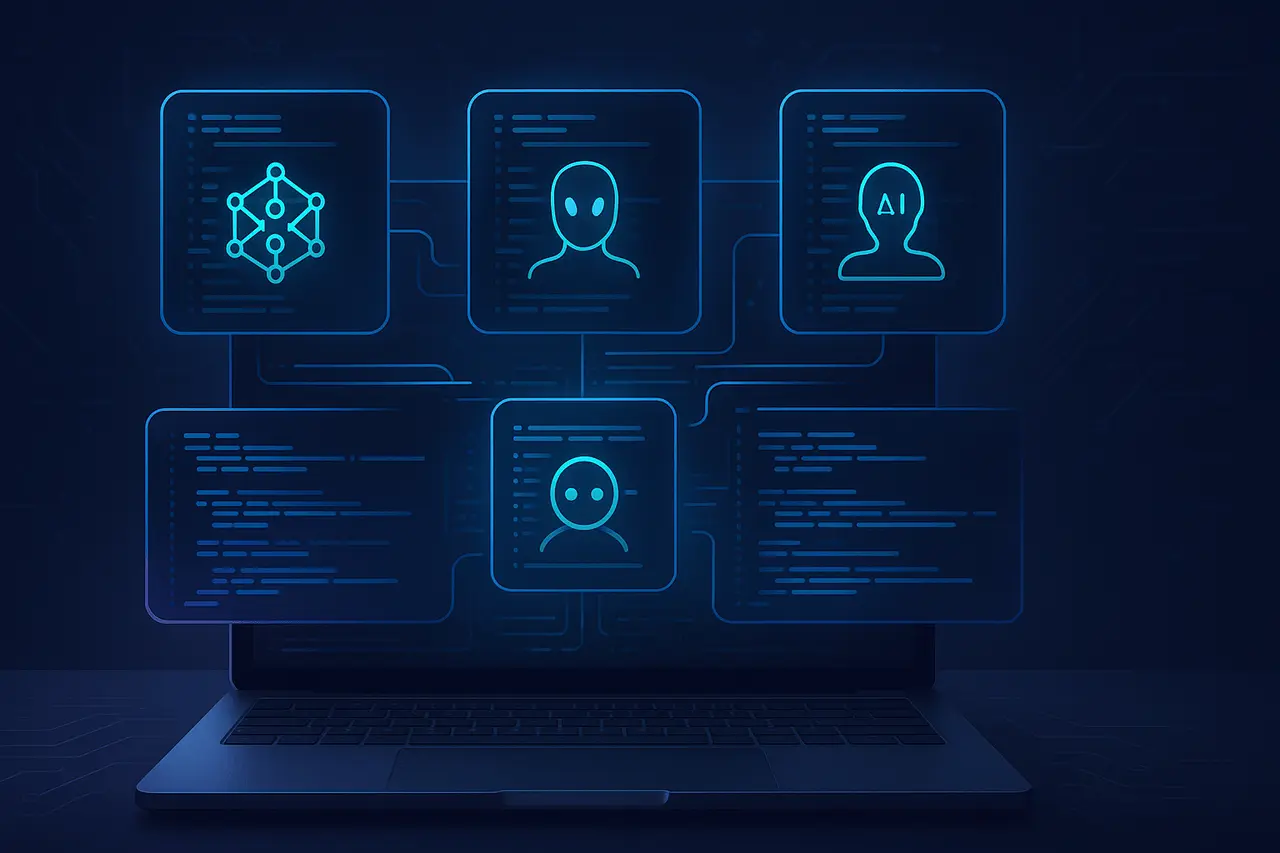
BLACKBOX integrates multiagent automation into its command-line interface (CLI) and local workflows. By using commands like /multiagent, you can give the identical code task to multiple AI agents, including BLACKBOX’s own Claude Code, Codex, and Gemini simultaneously while at the same time. The agents generate code independently or provide solutions to the request given.
Parallel Execution for Diverse Results
In contrast to single-agent or sequential approaches, Blackbox’s multiagent execution executes the selected agents in parallel. This means that rather than waiting for a model to produce its output before trying another, you can get all results at once. Each agent brings their unique understanding and power to the task, which is crucial in the face of complicated logic, massive code bases, or complex needs.
AI-Driven Evaluation
When the agents have completed their respective implementations, a judging element analyzes the results. This judge reviews outputs against quality and accuracy standards and automatically selects the best solution, typically using the results to create a ‘pull request’ (PR). By automating the evaluation process, BLACKBOX reduces the manual burden on developers and ensures that the selected solution is compatible with the project’s code guidelines and goals.
Local Development and Privacy
The main benefit of BLACKBOX’s approach is local execution. Agents run on the developer’s computer or in a secure environment, so sensitive code and context do not need to be removed from the system, improving security and privacy compared to cloud-based solutions. This is especially important for companies and teams that handle proprietary or controlled code.
BLACKBOX multi-agent AI coding: Advantages of Local Multi-agent AI Coding
1. Efficient Solution Discovery
The simultaneous operation of multiple agents enables various models to test different methods for solving a code task simultaneously. This improves the likelihood of obtaining a top-quality solution more quickly than relying solely on just one AI suggestion.
2. Enhanced Quality of Code through Comparative Evaluation
The integrated judge evaluates several outputs to determine the most error-free and efficient results. The dual-layer validation is similar to an informal review in which participants suggest solutions while colleagues help refine or choose the most efficient one.
3. Privacy and Control
Because the system is locally operated, the code remains within your infrastructure. This protects your privacy when you send your proprietary source code to external cloud APIs.
4. Flexible with a variety of models
Developers can combine multiple agents, each powered by distinct base models ranging from open-source engines to proprietary systems such as Claude Code or Gemini. This flexibility lets you leverage the strengths of various models for specific needs.
5. Optimized for Complex Tasks
Multiagent workflows excel at multi-step challenges by delegating tasks rather than having an AI handle all the reasoning in a single pass. This modular approach to problem-solving mirrors collaborative human workflows and increases scalability and precision.
BLACKBOX multi-agent AI coding: Practical Use Cases
Feature Implementation and Refactoring:
Developers can use multiagent coordination to present and test different approaches for implementing a new feature or refactoring existing modules to ensure their security.
Automated Unit Testing and Bug Fixing:
Agents may be assigned simultaneously to produce code fixes and tests, and the judge can choose the one with the best test coverage and the fewest regressions.
Performance Optimization:
Different agents could propose algorithms or performance enhancements to be evaluated together to select the best balance between speed and reliability.
Exploratory Data Tasks:
Beyond the code-generation process, multiagent work can support areas such as data analysis, where agents can perform data analysis or visualization tasks, but this is a new use case.
BLACKBOX multi-agent AI coding: Challenges and Considerations
Multiagent platforms are effective; however, they do not come without challenges.
- Compatibility and Clarity: Coordination of outputs must be coherent and comprehensible to developers.
- Security Risks: Execution of local agents could alter files or systems. Proper security measures and review controls are crucial.
- Requirements for Resource: Parallel execution of multiple models can require significant computing resources, particularly for large codebases.
In addition to multi-agent AI management, which includes the accountability of automated decisions, this area is evolving within the developer community.
Final Thoughts
Blackbox’s shift to local multi-agent AI is an essential step in developing AI-powered tools for developers. By combining parallel execution of agents, configurable model selection, and an automatic judging layer, all without the cloud, it solves numerous concerns developers face today, including code quality and data privacy.
Although multi-agent systems require careful configuration and sufficient local resources, their advantages are evident in complex programming tasks that require high-impact efficiency and accuracy. As AI tools continue to develop, methods such as this will likely shape the future of developers’ workflows, not as a singular assistant, but as part of a coordinated, team-based approach that integrates with engineers.
Frequently Asked Questions
1. What’s a multi-agent artificial intelligence in the field of coding?
MMultiagentAI refers to systems in which multiple AI agents (models) execute the same code task simultaneously. Each agent has an answer, while a coordinated or judging mechanism decides on the most effective outcome.
2. What is the difference between local execution and cloud AI Tools for coding?
Local execution runs all AI computation and inference on your personal computer or infrastructure, reducing reliance on cloud APIs and protecting sensitive code. Cloud-based applications, however, typically run code on remote servers.
3. Do I require specific hardware to run mmultiagenttask locally?
Multi-modeling in parallel could benefit from substantial CPU/GPU power and memory. Smaller tasks can be run on standard developer machines; however, complex codebases could require more powerful hardware.
4. Is the AI judge faulty?
The judge’s automated system evaluates outputs based on specific quality indicators; however, just like any AI, it can miss situations that are not considered edge cases. Developers should scrutinize the outputs they select, particularly to ensure that production changes are made.
5. Is mmultiagentAI ideal for all programming projects?
This strategy shines in complex or high-risk development tasks, where a comparative analysis can yield more favorable outcomes. Simpler tasks do not necessarily require a multi-agent implementation.
6. How do I decide which agents to add to the course?
Choose agents according to their strengths. Some models excel at reasoning, while others excel at code generation or other domain-specific tasks. Testing and profiling may help you make the most effective selection.