
A brand new developer toolkit called Firecrawl CLI will facilitate AI agents to interact with websites. The command-line interface allows users to extract structured information from websites, run internet searches, and execute interactive browsing sessions on cloud-based browsers.
Created for developers who are building AI agents and automation systems, Firecrawl provides an easy way to grant large model languages controlled access to real-time web data. It also connects to the most popular AI programming environments and assistants like Claude Code, Codex, and various other frameworks for agents.
AI agents are increasingly requiring immediate information and the capability to navigate through online content. Tools such as Firecrawl are beginning to emerge to fill the gap that exists between static AI models and the ever-changing online world.
What is Firecrawl CLI?
Firecrawl CLI is a command-line toolkit that was designed to aid AI agents in processing and accessing the web’s content quickly and efficiently. Instead of having developers manually create the scraping system or integrate search features, it comes with built-in features to extract data from websites and browsing.
The toolkit enables AI systems to carry out three main tasks:
- Scrape webpages as well as extract clear, structured information
- Browse the internet and obtain full results
- Launch cloud browsers to automate interactive browsing flows
This function is particularly helpful for developers creating self-contained AI systems in which the system is required to collect data from web pages, documentation pages, or online databases.
Firecrawl’s style emphasizes the wide coverage of the web while keeping token usage to a minimum, which is one of the most important factors when dealing with large models of languages.
Key Capabilities of the Firecrawl CLI
The CLI Firecrawl integrates several web-access options into a single toolkit that is optimized to work with AI workflows.
1. Structured Web Scraping
The CLI is capable of extracting clear and well-structured content from websites by removing irrelevant elements like advertisements as well as Navigation menus.
This makes AI models concentrate on the relevant data instead of the raw HTML, which improves the quality of responses produced through AI assistants.
Typical scraped content includes:
- Article text
- Product information
- Documentation pages
- Structured metadata
This feature is especially beneficial to information retrieval and search systems, as well as research agents.
2. Built-In Web Search
Firecrawl also comes with integrated online search capabilities, which allow AI agents to get live results of searches.
Instead of basing on static datasets, AI agents can:
- Search for current information
- Retrieve multiple results
- Get structured data from these results
This feature allows developers to develop AI search assistants. tools for competitive analysis and automatized monitoring platforms.
3. Cloud Browsers for Interactive Automation
Certain web pages have to be compatible with JavaScript execution as well as authentication flows, and dynamic interactivity, prior to the content being accessed.
Firecrawl tackles this issue with the cloud-based environment of browsers, which AI-powered agents are able to launch and manage programmatically.
These browsers let users
- Navigate complex websites
- Interactively interact with dynamic material
- Execute multi-step workflows
This feature opens the way to more advanced automated activities, such as completing forms or data collection using dynamic dashboards, or interfacing via a SaaS platform.
Designed for AI Agent Development
The Firecrawl Command Line was specially designed to work with AI-based agent systems and programming environments.
It is compatible with tools, such as:
- Claude Code
- Codex
- OpenCode
- Other development assistants powered by AI
Through giving direct access to the internet within those environments, Firecrawl allows developers to create self-contained agents that gather data, as well as analyze data and perform jobs on the internet.
The tool comes with features that are designed to cut down on the amount of computational work.
Token-Efficient Data Handling
In the event that AI systems are able to retrieve huge amounts of content from the web, token use can quickly cost a lot of money.
Firecrawl tackles this issue by enabling
- Local memory for data scraped
- Search tools based on Bash
- Effective retrieval of only the relevant text segments
This design allows developers to cut costs for APIs while increasing efficiency.
Why Web Access Is Critical for AI Agents?
A lot of large-scale language models rely predominantly on static data for training. Without tools from outside that can access or verify the current data.
web access software, such as Firecrawl, assists in overcoming this issue by enabling
- Real-time information retrieval
- Dynamic knowledge updates
- Automation of research workflows
This is especially important in applications such as:
- Market intelligence agents
- Technical documentation assistants
- AI-powered tools for research
- Systems for automated customer service
As AI agents grow increasingly autonomous, directly interfacing with Web data has now become an essential feature of them.
Firecrawl CLI Features Overview
| Feature | Description | Benefit for AI Agents |
|---|---|---|
| Web Scraping | Extract structured content from websites | Cleaner inputs for AI models |
| Web Search | Retrieve live search results | Access up-to-date information |
| Cloud Browsers | Run automated browsing sessions | Handle dynamic websites |
| Local Data Storage | Store scraped content locally | Reduce token usage |
| CLI Interface | Command-line integration | Easy developer workflows |
How Developers Can Start Using Firecrawl CLI?
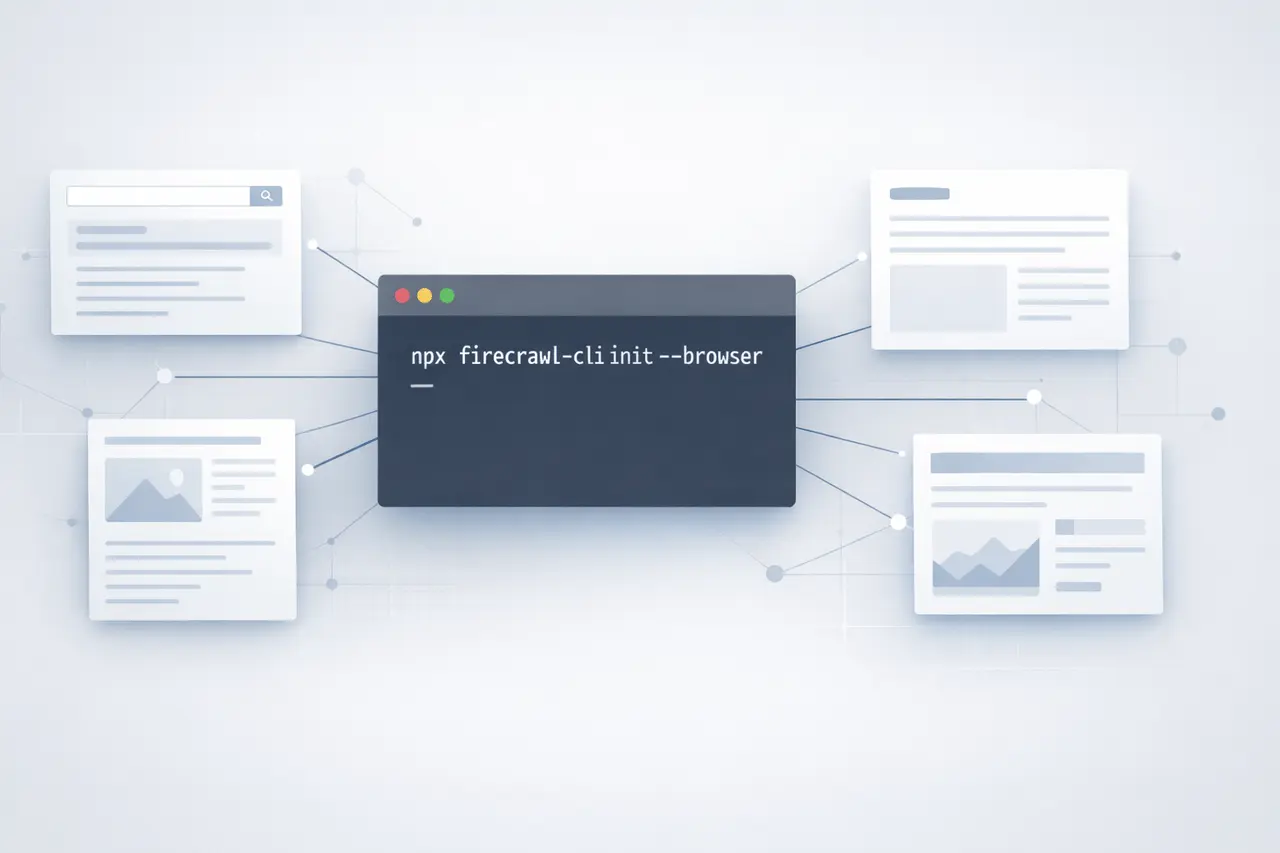
Developers can initialize the toolkit straight via the command line:
npx -y firecrawl-cli@latest init --all --browser
This command installs the CLI and configures its scraping, search, and browser capabilities.
Once installed, developers can integrate Firecrawl into AI agent pipelines, automation scripts, or coding assistants.
Potential Use Cases for Firecrawl CLI
Firecrawl powers an array of apps for data gathering and automation using AI.
AI Research Agents
Agents can browse the internet, scrape content, and then summarize the results automatically.
Documentation Assistants
Developers are able to build AI tools that can read the documentation pages and respond to technical queries.
Competitive Intelligence Tools
Companies are able to monitor the websites of competitors and obtain key information about their products.
Autonomous Data Pipelines
AI systems can collect data from various sources and then feed it into workflows for analytics.
Firecrawl CLI vs Traditional Web Scraping Tools
| Capability | Traditional Scrapers | Firecrawl CLI |
|---|---|---|
| AI-Ready Data | Limited | Structured for LLMs |
| Built-in Web Search | No | Yes |
| Cloud Browsers | Rare | Integrated |
| Token Efficiency | Not optimized | Designed for LLM workflows |
| AI Agent Integration | Manual | Native |
My Final Thoughts
The release of Firecrawl CLI signals an evolving trend in the AI community towards web-connected AI agents. As developers develop increasingly autonomous AI systems, providing models a structured interface to the internet is becoming more crucial.
Combining live search, web scraping, and the cloud-based browser’s automation features, Firecrawl provides a unified toolkit for developers who want to build AI-powered workflows. Its emphasis on efficiency of tokens and its integration with current AI programming environments also address the practical issues of deploying large-scale language models.
As the AI sector moves towards automated agents and tools, such as Firecrawl, will likely play an important role in allowing AI systems to communicate with the internet in more secure and scalable ways.
Frequently Asked Questions
1. What is Firecrawl CLI?
The Firecrawl Command Line Interface is a development toolkit that permits AI agents to crawl webpages and perform web searches or interact with sites via web browsers that run on the cloud.
2. What is the reason AI agents require the tools to scrape websites?
The majority of AI models are based on training data that could be out of date. Web scraping tools enable AI agents to access pertinent and current information on the internet.
3. Does Firecrawl CLI allow for the automation of the browser’s interactions?
Yes. Firecrawl also includes cloud browser environments that permit AI agents to browse through dynamic websites as well as perform interactive workflows.
4. What AI development tools are compatible with Firecrawl?
Firecrawl CLI is compatible with a variety of AI code environments, such as Claude Code, Codex, and OpenCode. This makes it ideal for the creation of self-contained agents.
5. Is Firecrawl only available to developers?
Primarily, yes. Firecrawl CLI is specifically designed for developers who are building AI systems, agents, and automation software.
6. What is the best way to help Firecrawl decrease AI tokens?
The tool is compatible with local storage as well as command-line features for searching, which allows AI systems to search for only relevant information instead of sending pages of content for the AI model.
Also Read –
Firecrawl Browser Sandbox for AI Web Automation