

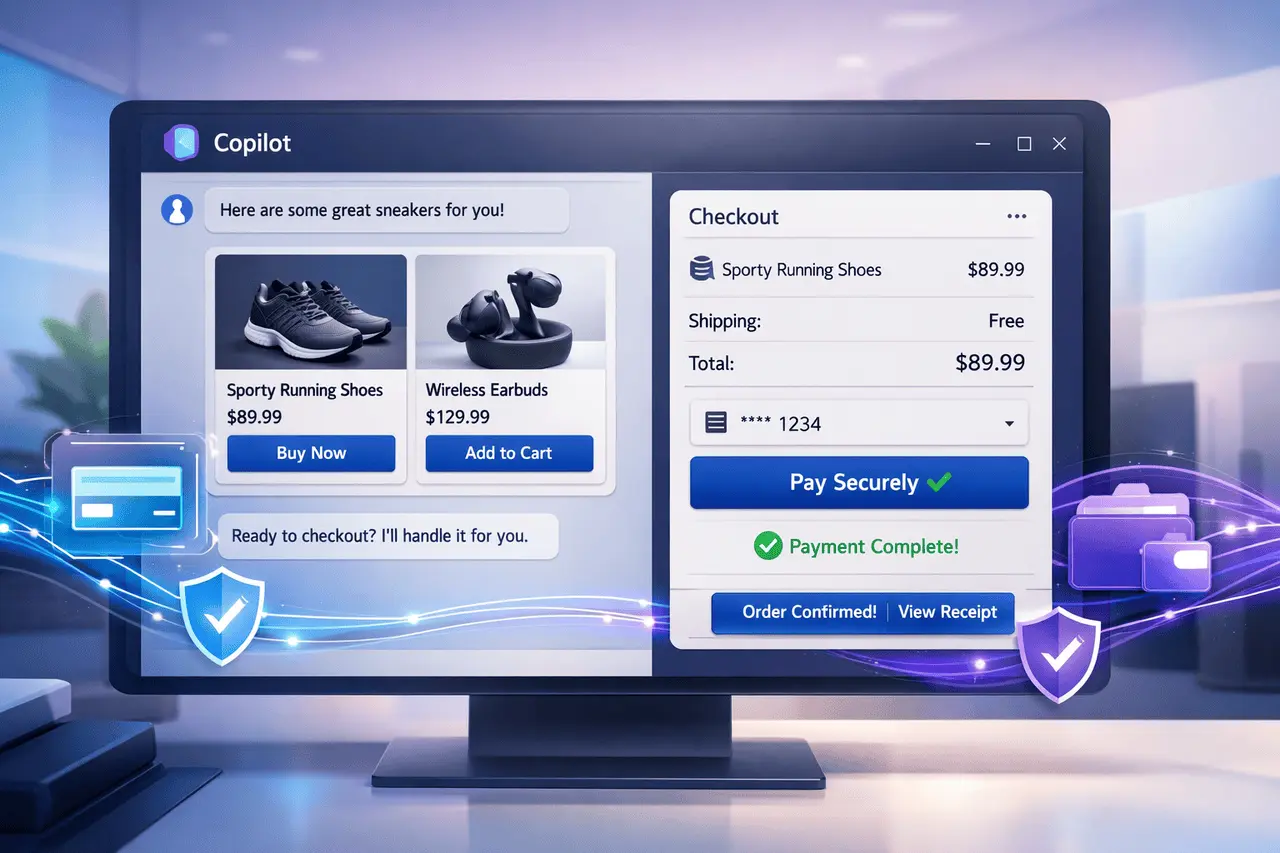
Microsoft has taken a significant step in the development of AI-powered commerce with the introduction of Microsoft Copilot Checkout. This built-in in-chat shopping experience lets users search for options, make selections, and pay for items directly from their Copilot interface. This change, facilitated by a strategic partnership with Stripe and PayPal, will signal a broader shift towards conversational shopping, in which discovery, decision-making, and payment are seamlessly integrated into the AI assistant. The rollout began in January 2026 and is now available on Copilot.com in the United States, with plans to expand it to the rest of Microsoft’s Copilot ecosystem.
What Is Copilot Checkout?
Copilot Checkout is a brand-new feature in Microsoft Copilot that transforms the AI assistant from a tool for answering questions into a practical shopping platform. Customers who use Copilot will now be able to get product recommendations in response to their questions, view product information, and make purchases in the same conversation, without being redirected to e-commerce websites from outside. The chat experience combines product discovery and transaction processing into a seamless experience that is an essential element in the growing trend of ad-hoc commerce.
How It Works?
If a user requests Copilot suggestions for products and the AI responds with options, including a “Buy” button. When you click this button, it opens an integrated checkout page within the Copilot chat. The buyer can enter their shipping details and payment information, then complete the purchase without leaving the application. In the background, Copilot communicates with Stripe or PayPal to secure payment authorisation, tokenise payments, and prevent fraud.
The native checkout is powered by
- The Stripe Agentic: Commerce integration lets you process tokenised payments and secure transactions while allowing the seller to retain control over the data and processing.
- PayPal’s Agentic: Commerce features include inventory surfacing, customised checkouts, guest checkout, and wallet payments.
Both platforms offer a consistent payment experience for buyers and facilitate a seamless transition from browsing to buying.
Why Native Checkout Matters?
Traditional online shopping usually involves the user leaving a search engine or AI interface to place an order on a seller’s website or a marketplace. Copilot Checkout removes this friction by allowing customers to make their decisions and conduct transactions through a continuous chat. It has a variety of advantages:
- Reduced abandonment Rate: By keeping users within the Copilot community and facilitating checkout, the process becomes more efficient and quicker, potentially decreasing cart abandonment.
- Increased Conversions: Microsoft’s own data suggests that the inclusion of Copilot in shopping experiences could increase the likelihood of purchase, with 53% higher purchase rates in 30 minutes and 194% higher conversion rates when customers explicitly indicate intent to buy.
- Streamlined User Experience: Shoppers no longer need to manage multiple browser tabs or navigate to external websites. Instead, they communicate with a single AI assistant that provides all recommendations and transaction details in one spot.
These enhancements make shopping more enjoyable and user-friendly, particularly for people accustomed to chat-based interfaces and immediate results.
Stripe and PayPal: Powering Secure Payments
Stripe Integration
Stripe leverages Agentic Commerce Protocol expertise in Copilot Checkout to enable secure, efficient payments. When a customer makes a purchase, Stripe provides a shared payment token that allows sellers to complete transactions without divulging sensitive payment information. Merchants can continue using their preferred payment method while benefiting from Stripe’s fraud and risk alerts.
Stripe is a long-standing payments partner to Microsoft and, thanks to this integration, helps bring AI-assisted commerce into the mainstream by making checkout feel natural and flexible.
PayPal Integration
PayPal’s role involves surfacing inventory for merchants, providing various payment options (including credit and debit cards), and allowing guests to check out, all from Copilot. Merchants can sync their product catalogues with PayPal’s agent commerce service, making their product listings available for purchase through Copilot. PayPal also extends its protections to sellers and buyers for transactions eligible for Copilot Checkout.
The integration draws on PayPal’s long track record in digital transactions and combines its reliable infrastructure with Copilot’s AI capabilities to provide users with an intuitive, secure checkout experience.
Broader Commerce Integration and Merchant Benefits
Copilot Checkout doesn’t exist without other services. Microsoft is working with Shopify to automatically enrol Shopify sellers (with the option to opt out) so they can sell directly on Copilot. The first brands to join Copilot comprise Urban Outfitters, Anthropologie, Ashley Furniture, and selected Etsy sellers.
Alongside the native in-app checkout feature, Microsoft has introduced Brand Agents AI shopping assistants that retailers can integrate on their own sites. They guide customers through the process of identifying products and completing checkout, with the merchant’s voice providing personalised support and integrating with the merchant’s existing sales channels.
From a business viewpoint, this method expands the company’s reach, putting it in front of highly interested consumers, and ensures the protection of customer data and the fulfilment of customer responsibilities.
The Future of AI-Driven Commerce
Microsoft’s involvement in Copilot Checkout is a sign of the industry-wide trend towards AI-powered shopping experiences. Competitors like OpenAI and Google have launched similar in-chat purchasing capabilities, signalling an evolution in how people interact with online marketplaces. AI assistants are no longer just tools to help consumers discover products; they are active players in the purchasing process.
In the meantime, as AI commerce continues to advance, integrating trusted payment services such as Stripe or PayPal into chatbots could change consumer expectations for convenience, speed, and personalisation in online purchases.
My Final Thoughts
The debut of native checkouts in Microsoft Copilot highlights how quickly AI assistants are changing the face of online shopping. Through partnerships with Stripe and PayPal, Microsoft combines conversational intelligence with trusted payment technology, providing a simple and secure shopping experience while preserving merchant control over data. In the future, as Copilot Checkout rolls out more widely, it will signal a time when AI can help shoppers choose what to buy and when, and also help them finish purchases immediately and with confidence. The shift towards conversational, in-app purchases could alter the way people shop online in the coming years.
Frequently Asked Questions
1. What is Copilot Checkout?
Copilot Checkout is a chat-based purchase option in Microsoft Copilot that lets users browse, choose, and purchase products within the AI conversation, without leaving the application.
2. Which payment services support Copilot Checkout?
When it launched, Copilot Checkout was powered by Stripe and PayPal and covered inventory display and secure payment transactions within Copilot.
3. Is Copilot Checkout available?
It is available on Copilot.com in the United States, with expansion to other Copilot platforms in the near future.
4. Do retailers keep customer information through this system?
Yes. Merchants remain the retailer of record and are responsible for managing customer information, fulfilment, and data, as well as direct connections.
5. Do customers require separate accounts for purchases?
Users can pay for purchases with PayPal or credit/debit cards via Stripe and use guest checkout when available.
6. How can Copilot Checkout improve e-commerce?
By combining all the recommendation, discovery, and payment steps into a seamless process, Copilot Checkout reduces friction, speeds transactions, and increases conversion rates.
Also Read –
Agentic Commerce Suite: Sell Through AI Agents with Stripe
Replit Stripe Integration: How to Add Payments and Monetize Your Apps?