
AI agents are swiftly changing from simple assistants to machines that can execute multi-step, goal-driven tasks in research, design, and software creation. In this new generation, Manus stands out for demonstrating what a truly AI agent can achieve when it integrates the use of tools, reasoning, and execution. Demos inside the system show practical and side-by-side scenarios that transcend chat messages and show the end-to-end results that typically require teams of experts.
This article explains the Manus AI agent, these actual-world applications to show the ways in which Manus extends the limits of AI-driven efficiency, why these capabilities are essential, and what they can mean in the near future for knowledge-based work.
What Makes a “Real” AI Agent Different?
A standard AI agent typically responds to questions or creates texts on request. An actual AI agent, on the other hand, could:
- Break down challenging objectives into concrete steps
- Conduct deep, multi-source research
- Create and modify files and code
- Integrate with other tools and workspaces
- Deliver polished, ready-to-use outputs
Manus shows this transition in a transparent manner through hands-on software that covers content creation, deal sourcing, web development, and the engineering of software.
Making a complicated article into an excellent infographic
One of the most compelling uses is changing a long, dense piece of writing into a simple visual infographic. Instead of simply summarizing information, Manus analyzes the structure, extracts the key information, and organizes it into an appealing visual narrative.
It’s an informational graphic that conveys essential concepts in a single glance, with labels, hierarchy, and a visual balance made in less than an hour. For educators, content teams, and marketers, this demonstrates the ways in which AI agents can connect gaps between unstructured data and ready-to-design assets.
Why is it essential:
- Reducing the dependence on separate design and research workflows
- Accelerates content repurposing
- Increases information accessibility for visually impaired learners
The creation of a website from Scratch using Deep Research
Another video showcases Manus creating a site focusing on UNESCO historic sites. The task goes beyond the creation of placeholder text. Agents conduct extensive multi-source research, confirm data, arrange pages logically, and then create a comprehensive piece of information.
Instead of being a thin, surface-level website, the output shows the depth of the site, its historical context, geographic details, and a structured navigation. It demonstrates the way an AI agent can serve as a researcher as well as a creator of content.
The key takeaway is that Manus does not just “write a site”; it creates one based on verified information and a consistent structure, a key difference for serious web projects.
Deal Sourcing: From Research to a Professional Slide Deck
In an actual deal sourcing scenario, Manus is tasked with the identification of relevant companies and then presents the findings in an elegant slide deck. The agent conducts research, analyzes their findings, synthesizes the results, and transforms these into a format that is appropriate for decision makers.
This is about organizing information in a logical manner, highlighting distinct features, and structuring slides to ensure clarity. The work usually includes presentation analysts as well as research experts.
Business impact:
- More efficient partnership or investment analysis
- Consistent, professional deliverables
- Manual effort is reduced across teams
Building a Mini SaaS App End to End
Perhaps the most obvious evidence of the capabilities of agents is Manus developing an e-commerce SaaS application. The agent is able to scaffold the project, implement features, and perform basic development tasks on its own.
It’s not limited only to code fragments. Manus is aware of project structure as well as dependencies and functional requirements, effectively a junior to mid-level developer who can take a project from idea to a functional prototype.
What makes this important:
- Reduces the barriers to the launch of new products
- Iterative prototyping, iteration, and rapid development.
- A future in which AI agents actively take part in the process of software engineering
From YouTube Video to Polished Slide Deck
Manus also shows multimodal comprehension through watching a video and separating the key elements, and then turning these into appealing slides. This method requires comprehension, summarization, and design awareness, which are skills that typically span different tools and functions.
For professionals who depend on video content to learn or for reporting, this feature transforms the passive consumption of content into shareable and actionable assets.
Built-In Power Features That Extend Capability
Beyond these demos with the headlines, Manus supports a range of advanced actions, which bolster its position as a complete AI agent.
- Directly pushing code into GitHub, creating seamless development workflows
- The ability to process multiple files at one time is Ideal for research-intensive or document-intensive tasks.
- Connecting to workspaces, such as Notion, and embedding into operational environments
These capabilities are crucial to help move AI from an isolated research project to regular use by professionals.
Why Manus Signals the Future of AI Workflows?
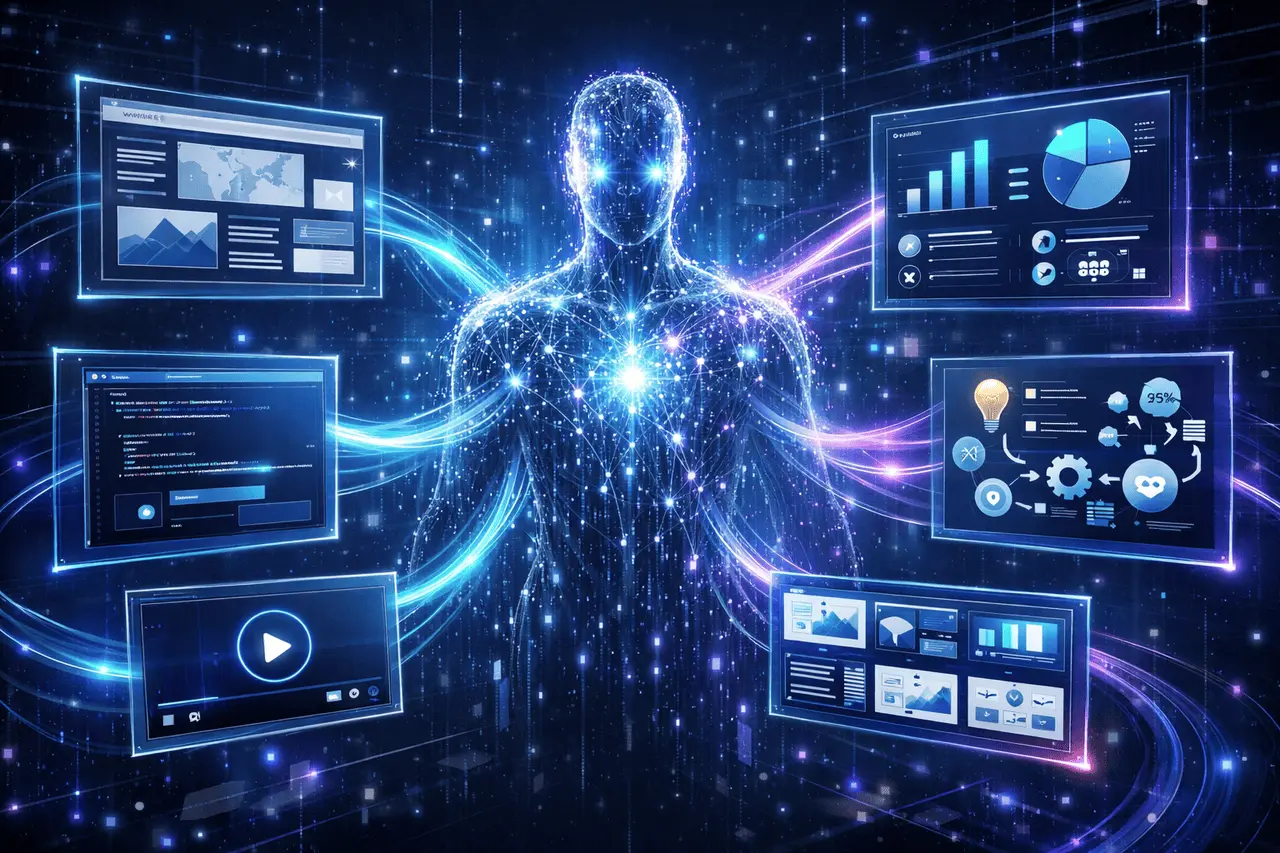
What connects these scenarios is one feature: an orchestration. Manus creates, studies, then executes and delivers frequently across multiple platforms and formats, without the need for constant human interaction. This is a significant move towards AI systems that work as a partner rather than a substitute for human interaction.
Tech-savvy professionals. The implications are obvious: workflows that previously required a variety of platforms and experts are now handled by one, well-integrated AI agent.
My Final Thoughts
The live-action demonstrations of Manus show a change in the way we evaluate AI capabilities. Instead of asking if the AI can write code, design, or even design, the more important concern is whether it could determine the outcome. Manus has shown that AI agents have the capability to accomplish exactly that, turning research into images, concepts into product ideas, and the raw data into asset-ready for use.
In the future, as AI agents continue to develop platforms that blend deep thinking, tool integration, and execution, such as Manus, they will define the next stage of work done digitally.
Frequently Asked Questions (FAQs)
1. What kind of work is Manus most suited to?
Manus excels in multi-step projects that blend research, development, and execution, including web design as well as slide deck generation software prototyping and the transformation of content.
2. What makes an AI agent similar to Manus different from chatbots?
Chatbots typically respond to requests, whereas an AI agent such as Manus can create actions, employ instruments, analyze files, and produce fully integrated, prepared outputs.
3. Can Manus be implemented in real-world business workflows?
Yes. Features such as GitHub Integration and Workspace connections permit Manus to function in existing professional environments, rather than separate demonstrations.
4. Are Manus beneficial for those who are not developers?
Absolutely. Although it can be used for the coding process, Manus is equally valuable for marketers, researchers, analysts, and founders who require end-to-end outputs.
5. Manus replaces human professionals? Manus substitute for human experts?
Manus is best understood as an acceleration. It decreases manual work and speeds up execution, which allows humans to concentrate on the strategy, judgment, and imagination.
Also Read –
Manus 1.6 Max: What’s New in Performance, Mobile Apps & Design?