


Agentic commerce is widely regarded as one of the most significant developments in online retail. It is changing the way customers interact with online stores. Instead of browsing websites or apps manually, customers can now rely on AI agents to find the products they want, review options, and complete transactions. As the ecosystem expands, companies need to build infrastructure that enables their products to be accessible to intelligent systems without developing custom integrations for each platform.
The Stripe Agentic Commerce Suite addresses this problem by providing a single, secure, safe, and developer-friendly system that connects retailers and AI agents through a single integration. It can manage checkout, product discovery, transactions, payment processing, and order handling, so companies of all sizes can participate in the new age of AI-powered shopping.
This article focuses on Agentic Commerce Suite, how it works, and why it’s essential, and the benefits it can bring to online merchants, platforms, and developers.
What Is the Stripe Agentic Commerce Suite?
The Stripe Agentic Commerce Suite is a recently launched service that enables online merchants to sell products via Artificial Intelligence (AI) agents through an integrated platform. It offers an array of tools to make products accessible to agents, facilitate customer checkout on their behalf, and handle payments and fraud protection. This eliminates the need for companies to create custom integrations for every AI agent platform and to keep up with changing technology standards.
Agentic commerce refers to AI software that autonomously works for customers, not only suggesting products but also finding them by analyzing options, selecting them, and even making purchases on customers’ behalf. Stripe’s suite of products enables businesses to participate in this new channel of commerce while retaining control of their commerce stack and customer experience.
Why Agentic Commerce Matters?
In traditional e-commerce, consumers can purchase products and find them through apps or websites. In the world of agentic commerce, AI agents embedded in chat or virtual assistants perform the majority of the work. They analyze buyers’ intent and identify the most appropriate products, enabling purchases without visiting a physical store. This is changing the way consumers shop online, with a focus on speed, convenience, and individualization.
Major technology platforms, such as AI chat applications like ChatGPT and others that use protocols like the Agentic Commerce Protocol (ACP), are helping open the door to these interactions, transforming conversations into direct commerce. Stripe’s suite of products enables merchants to capitalise on this trend without creating custom adaptations for each AI channel.
Core Features of the Agentic Commerce Suite
1. Unified AI Agent Integration
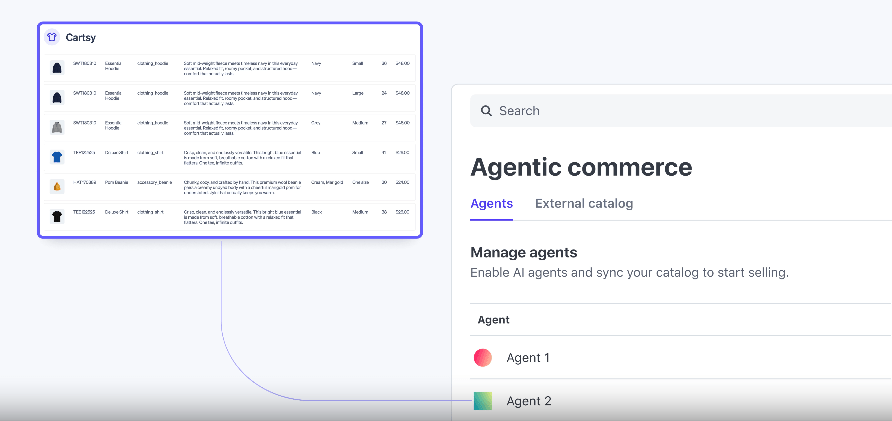
The Stripe platform lets businesses connect once and sell via multiple AI agents. Instead of creating separate APIs or managing separate catalogues for each agent, merchants can upload their catalog to Stripe or connect to syndication partners’ existing catalogs. Stripe can then expose this catalog to its supported AI agents and handle price and product discovery in real time.
2. Simplified Checkout and Order Handling
Once they are listed with Stripe, purchases made by AI agents are processed via Stripe’s Checkout Sessions API. It handles the most critical aspects of the purchasing process, including calculating shipping rates and taxes and tracking inventory, so merchants don’t need to change their backend systems to accommodate agent-mediated transactions. Merchants can use additional Stripe-specific tools (e.g., Stripe Tax) or keep some aspects of their workflows.
3. Secure Agentic Payments
Agent-initiated purchasing presents new challenges to payment security. Stripe’s suite offers Shared Payment Tokens (SPTs), A tokenised payment primitive that lets AI agents initiate transactions without having access to authentic payment credentials. The tokens can be categorised by time, seller, and quantity, reducing the risk of misuse and fraud.
4. Fraud Prevention and Risk Management
The traditional fraud system is geared to human-like buyer behaviour. AI agents work differently and may accidentally activate fraud detection systems. The integration with Stripe works alongside broader risk tools, including Radar, to make it easier to distinguish between high-intent agent activity and suspicious automated activity, reducing chargebacks and ensuring merchant revenue.
5. Modular and Flexible Adoption
This suite can be configured modularly, allowing users to choose only the features they require. If a business wants to use tools for discovery, payment handling, or comprehensive order management, it can tailor the application to its specific technical stack and business goals.
How does it work?: From Catalog to Conversion
1. Catalog Connection
Merchants upload or connect their product catalogs through Stripe’s Dashboard. The catalog is the source of information for AI agents, providing the most current prices, availability, and product information.
2. Select AI Agents for Sales Channels
In the Stripe Dashboard, businesses choose the AI agent endpoints where they would like their products to be discovered and purchasable. This may include different platforms for conversational commerce that allow the use of agents in commerce.
3. Checkout Integration
Stripe uses the Checkout Sessions API to manage taxes, shipping, and other checkout processes. Customers who use an AI agent enjoy seamless shopping and can often stay in their own AI interface.
4. Payment Authorization and Fulfillment
Payments are made via Shared Payment Tokens, which keep card details private. After purchase, orders are transferred to the established order management software to facilitate fulfillment and customer service.
Who benefits from using the Agentic Commerce Suite?
E-Commerce Retailers
Retailers who want to tap into the demand for emerging discovery methods can increase their reach without much investment.
Marketplaces and Platforms
Platforms can help their sellers become “agent-ready” by offering modern shopping experiences powered by AI-driven customer behavior.
Commerce Solution Providers
Integrations with partner companies like Wix, WooCommerce, BigCommerce, and many others mean that even smaller businesses can access agentic commerce through familiar technology stacks.
Agentic Commerce Suite: Challenges and Considerations
Integration Complexity
While Stripe simplifies the technical work, preparing for agentization still requires meticulous data preparation and ensuring that product metadata complies with the AI standard.
Evolving Standards
Agentic commerce is constantly evolving, and protocols such as the Agentic Commerce Protocol (ACP) and others are shaping the future of interactions. Merchants need to monitor developments to ensure they remain aligned.
Fraud and Trust
AI agents perform differently from humans, which could lead to false fraud alerts. Working with a platform that is aware of these differences like Stripe’s tools are designed to achieve, is crucial to mitigate risk.
Final Thoughts
The introduction of the Stripe Agentic Commerce Suite marks a significant shift in how online commerce will operate in the near future. As AI agents become the primary interface for product discovery and purchase, businesses require infrastructure that securely and effectively connects autonomous agents with existing commerce systems. The solution from Stripe not only facilitates this transition but also adds new capabilities, including Shared payment Tokens and modular checkout tools that address security, fraud, and workflow problems that arise with agent-mediated purchases.
Although the market is still growing, early adoption will allow retailers to capitalize on new consumer demand and stay in the game as consumer behaviour shifts towards AI-driven decision-making. Businesses that invest in agentic commerce now will be better prepared to grow in a world where AI agents serve as trusted intermediaries, resulting in faster conversions and more personalized shopping experiences.
Frequently Asked Questions
1. What is the term “agentic commerce?
Agentic commerce is the process by which AI agents autonomously find and complete transactions for their users, moving beyond basic recommendations to the execution of actual purchases.
2. What is the way that this Agentic Commerce Suite makes products accessible to AI agents?
Merchants connect their product catalog to Stripe, which, in turn, shares the most up-to-date product information with AI agent endpoints via an integrated, hosted system.
3. Do businesses lose control of checkout when using Stripe’s suite?
Merchants have control over shipping, taxes, and fulfillment, and can integrate Stripe’s tools into existing commerce platforms.
4. What are Shared Payment Tokens?
Shared payment tokens are a way to authorise payments using AI agents without divulging sensitive information about payment transactions, which is analyzed to protect against fraud and security threats.
5. Are small-scale merchants able to use this software?
Yes, platforms such as WooCommerce and Wix have integrated the solution, allowing retailers of all sizes to participate in agentic commerce without requiring extensive custom development.
6. Is this suite up and running now?
Stripe has revealed the rollout of its suites and opened access via waitlists, integrations through its Dashboard, and partners.
Also Read –
Replit Stripe Integration: How to Add Payments and Monetize Your Apps?