
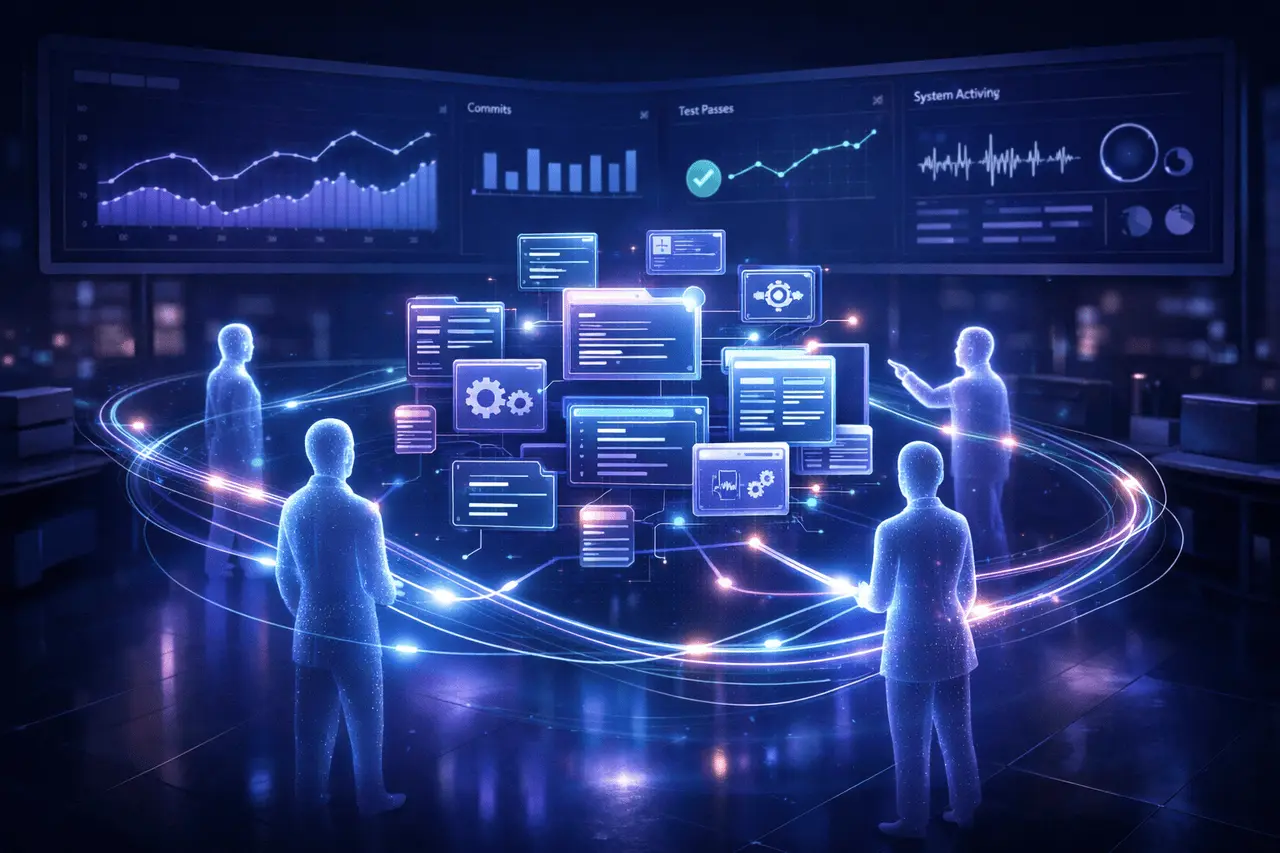
Modern AI is changing the way software is created. A new era is emerging: self-driving codebases powered by autonomous coders capable of managing complex, lengthy development tasks that require only human supervision. Instead of human beings manually writing or rewriting every line, multiple AI agents can collaboratively design, execute, and improve code over extended periods, fundamentally redefining the quality and efficiency of software engineering.
This article explains what self-driving codebases are, why it’s important, how it works, and its implications for real-world limitations and practical issues for teams and developers.
What Is a Self-Driving Codebase?
An auto-driving software codebase is a project of software where autonomous AI agents can:
- Know the structure and purpose of a codebase.
- Coordination of complex tasks across several subsystems.
- Repeat the code for a few days or weeks with no constant human intervention.
- Make commits, tests and refactors as part of an integrated process.
This goes beyond conventional AI software for code, such as autocomplete features or single-turn generation. These agents collaborate with specific roles, workers, planners and executors, to mimic a distributed development team working continuously with large goals.
Why Self-Driving Codebases Matter?
Software development has always relied on engineers’ human expertise for design, coding, debugging, and integration. However, large language models (LLMs) like GPT-5. x have evolved to the point that they can reason about architecture, adapt to changing environments, and produce consistent code across multiple files.
Self-driving codebases aspire to:
- Enhance Throughout: Shown high levels of around 1,000 commits per hour over uninterrupted runs for up to a week.
- Automated Test Iteration: Agents can create tests, run them, and repeat the test until the test metrics indicate correctness.
- Scale Development: Instead of a single engineer for each task, multiple agents can be working simultaneously on the same project.
- Reduce Manual Overhead: Routine modifications, refactors, and repetitive coding tasks can be automated.
This new format will impact enterprise engineering speed, prototyping acceleration, and even how teams structure their development workflow.
How AI Agents Power Self-Driving Codebases?
The core of self-driving codebases is agent orchestration frameworks. These frameworks control:
Multi-Agent Coordination
Instead of relying upon one AI instance to handle the entire task, agents are given specific tasks:
- Planners convert goals to particular tasks.
- Workers: Execute particular tasks.
- Executors: Manage sequences of actions across multiple iterations.
This layering structure is akin to human teams, increasing operational speed and scalability.
Dynamic Task Assignment
Agents work together by sharing information in advance, planning, and assigning the tasks. Initial studies showed that simple coordination between teams could lead to conflicts, and establishing roles significantly improved performance.
Acceptance of Controlled Imperfection
The need for strict accuracy before committing code has been proven to decrease throughput. Instead, systems tolerate minor mistakes, knowing that other agents will detect and correct them, thus maintaining a balance between speed and overall project quality.
Continuous Execution Loops
Agents constantly go through planning, programming, testing, and finally committing. Human engineers only intervene during major events or to express the purpose.
Feature Comparison: Traditional vs Self-Driving Codebases
| Aspect | Traditional Dev Teams | Self-Driving Codebases |
|---|---|---|
| Human involvement | Continuous | Periodic |
| Throughput | Limited by team size | Scales with agent count |
| Error handling | Manual review | Layered test agents |
| Task planning | Human planning | Automated via planners |
| Time to prototype | Weeks–months | Days–weeks (automated) |
Real-World Use Cases
The concept is driven by research, but the first experiments suggest potential for:
- Complex Projects: Building major subsystems like browser engines.
- Refactoring large legacy systems
- Test Suite Maintenance and development
- Continuous integration automation
The coding agents integrated into AI-based editors like Cursor (an AI-based IDE built on Visual Studio Code) exemplify how autonomous patterns can be directly integrated into developers’ workflows.
Benefits of Self-Driving Codebases
1. Higher Development Velocity
Multiple agents operating in parallel could significantly increase throughput and cut time to deliver.
2. Reduced Human Overhead
Routine programming testing, integration, and testing tasks are delegated to self-contained agents.
3. Adaptability to Scale
AI agents can increase their efforts based on resource availability, allowing them to run for days or weeks to meet difficult objectives.
4. Integrated Testing
Agents can generate tests, run them, and improve them, increasing code quality with each iteration.
Challenges and Limitations
Despite its promise, there are several obstacles to overcome:
- High-Quality Assurance: Agents might require oversight from a human to ensure architectural accuracy and adherence to standard practices.
- Clarity of Specification: Undefined goals can mislead people, and a clear understanding of the goal is essential.
- High Intensity Resource: High-performance computing resources are required for continuous, multi-agent runs.
- Semantic Stability: Agents may produce plausible but suboptimal code if models misinterpret complex contexts.
In the end, self-driving code may be able to handle structured, routine tasks with ease, but it requires human designers for top-level design and judgment.
Practical Considerations for Teams
If you intend to implement workflows for development driven by agents:
- Define Clear Objectives: Precise task instructions improve agent performance.
- Test Integrate In the Beginning: Ensure automated tests are readily available to agents for code verification.
- Watch Agent’s Output: Examine architectural and design choices regularly.
- Balance Automation and Oversight: Utilise agents to handle routine tasks, while human engineers deal with difficult issues.
My Final Thoughts
Self-driving codebases are a revolutionary development in software engineering, powered by autonomous AI agents capable of developing, coding, running tests, and iterating on long-running workflows.
This could change the way teams create software by reducing manual labour, increasing development speed, and changing roles within development teams. Human oversight is vital to ensure the integrity of architecture, strategic planning, and quality assurance.
While AI models and frameworks for agent orchestration are maturing, self-driving codebases are expected to become the basis for the future of development, moving software creation towards fully automated, smart systems.
Frequently Asked Questions
1. How do you define a self-driving, self-driving codebase?
A self-driving software base uses several independent AI agents to continually create, test, and improve software, reducing the need for human intervention.
2. Which AI agents cooperate in a self-driving software codebase?
Agents are assigned defined roles – workers, planners, executors, and planners – to break tasks down, execute code modifications and then verify the results together.
3. Are self-driving codes ready to be used in production?
They’re mostly research-based experiments, but they have promise for accelerating and automating prototyping in advanced workflows.
4. What do developers require the skills to be able to use self-driving codebases?
Engineers should concentrate on clearly defining their goals in designing validation tests and reviewing architectural choices.
5. Are self-driving codebases able to replace human developers?
In part, Agents can handle everyday tasks with ease; however, humans are still the primary guides for architecture, strategy, and quality standards.
6. What impact do self-driving codebases have on the quality of software?
With proper supervision and testing, they can improve reliability; however, the quality depends on clear validation guidelines and processes.
Also Read –
Cursor 2.4 Update: Subagents and Nano Banana Pro Features
Cursor Visual Editor: AI-Driven Drag-and-Drop UI Design