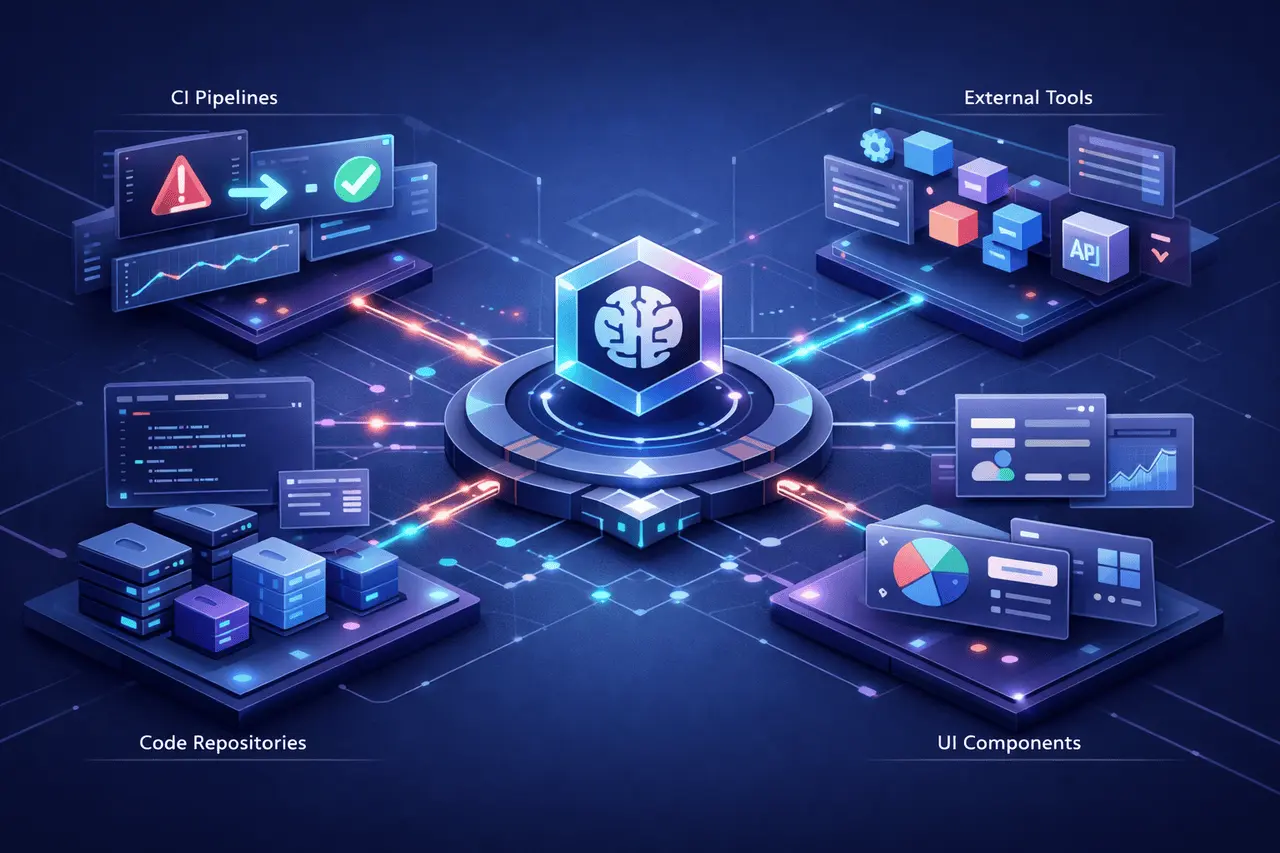


Meta AI Avacado models are being developed as a part of a larger technological shift that signals the direction of the Meta AI ecosystem. Recent changes to the platform suggest that Meta is gradually transforming its AI assistant into a multi-model, agent-driven system similar to modern web-based AI agents. The change isn’t limited to model upgrades and suggests a more thorough rethinking of how Meta AI plans, remembers, and interacts with platforms.
At the beginning of this transformation, Meta AI Avocado models are being tested alongside connectivity updates, new connectors, and earlier agent capabilities. These changes together indicate that Meta is working to set the stage to create a more autonomous, goal-oriented AI technology.
What Are Meta AI Avacado Models?
Meta AI Avacado models are recently discovered internal AI models currently being tested within the Meta AI stack. Two different models have been observed:
- Avacado
- Avacado Thinking
Although Meta hasn’t yet released its official technical documentation for these models, they appear to be considered experimental alternatives to the Llama-based routing system currently in production. The system continues to redirect users’ queries to Llama-based models, indicating that Avacado models aren’t yet being used publicly.
The name and the context indicate the importance of better thinking and planning, especially when multi-step tasks are involved, where the intermediate decisions are crucial.
What is the significance? Are Avocado Models Important?
The significance of Meta AI Avacado models lies more in the raw benchmarks and in the architectural intention. Meta is preparing their assistants for
- Multi-model orchestration
- Tools-augmented reason
- Long-running tasks using memory
- Browser-based agent workflows
These capabilities align closely with the emergence of AI agent frameworks rather than traditional chat assistants.
Key Signs for Strategic Change
Numerous platform-specific updates increase the importance of the Avacado model:
- Moving Meta AI’s Meta AI website to a new backend stack that does not alter the user user
- The introduction of a task selector to change the depth of the task
- Initial availability of calendar and email connectors
- Continuous advancement of Memory and Projects features
Together, the signals indicate an evolution towards permanent, contextually-aware AI actions.
The New Meta AI Architecture: Does It Work?
Meta AI’s ever-changing architecture is based on a routing layer that dynamically selects models based on the task’s complexity, modality, or access to tools.
Model Routing Layer
While users are currently interacting with models from Llama, internal testing has shown the ability to redirect the prompts to:
- Models in-house that are experimental, like Avacado
- External foundation models are utilised to evaluate and benchmark internal benchmarking
The routing layer allows Meta to measure reasoning depth, latency, and reliability without divulging incomplete systems to end users.
Big Brain Mode and Multi-Model Synthesis
The most important innovations are the work that was done on the “Big Brain” mode. The system is created to:
- Generate multiple replies from models of different types
- Combine them into a single synthesised answer
- Enhance accuracy and decrease single model failure models
This strategy is akin to ensemble reasoning and places heavy emphasis on trust over novelty.
Web Browser Agents, and the Sierra Model
A new model, known as Sierra, is being evaluated to provide the power to an upcoming browser agent. The new agent is expected to:
- Navigate websites
- Interfaces with the web
- Run multi-step workflows on behalf of the users
Its Sierra model is optimised for action-taking rather than just text generation, which aligns with Meta’s agent-centric approach.
Scheduled tasks and long-running actions
Another area of development is task scheduling. This feature could enable Meta AI:
- Perform actions in the future
- Be aware of conditions before deciding
- Handle recurring workflows
These capabilities rely in large part on users’ memory, planning, and dependable execution, areas in which Avacado Thinking models may play an important role.
OpenClaw Integration and Connectivity to Tools
One of the most technologically significant innovations is the newly discovered OpenClaw integration. This integration will enable Meta AI to connect to an OpenClaw gateway, which would allow:
- Access to other tools
- Standardised action execution
- Separation of Reasoning and control of tools
This approach reduces risk and expands capabilities, making it easier for Meta AI to communicate with other systems.
Practical Benefits of OpenClaw Integration
This method allows Meta AI to scale agent functions without tying models tightly to specific tools.
Meta AI vs Traditional Assistants
The shift toward Avacado models and agents marks a clear departure from conventional chat-based assistants.
| Aspect | Traditional AI Assistants | Meta AI Direction |
|---|---|---|
| Interaction style | Single-turn chat | Multi-step agent workflows |
| Memory | Limited or session-based | Persistent memory and projects |
| Model usage | One primary model | Dynamic multi-model routing |
| Tool use | Manual invocation | Autonomous agent execution |
This new technology puts Meta AI closer to advanced agents rather than bots that can converse.
Benefits of Meta AI Avacado Models
- Better reasoning for complex tasks
- Support for autonomous, goal-driven workflows
- Lower dependence on an architecture for a single model
- Improved integration of calendars, email, and web browsers
These advantages are especially applicable to use cases that focus on productivity.
Opening Questions and Limitations
Although it is a promising direction, a few doubts remain:
- No public benchmarks or performance data for Avacado models
- Unclear release timetable beyond springtime expectations for early spring
- External testing that is internal-only models restricts the transparency of the models
- Agent security and reliability are not proven at the scale of
In the meantime, until public documentation or releases are made, they should be considered experimental.
Practical Guidelines for Businesses and Users
Organisations that are evaluating the path of Meta AI’s development should be aware of:
- Agent-based AI presents new governance issues
- Tool integrations need solid permission models
- Multi-model systems can improve accuracy, but they also add complexity
The first adopters should plan for the gradual deployment rather than immediate reliance on production.
My Final Thoughts
Meta AI Avacado models represent more than a simple update of the model. They’re a sign of Meta’s intention to move towards an agent-driven, multi-model AI platform capable of planning, recalling, and executing across different tools. While many features are still under development, the design hints at a future in which Meta AI operates less like a chatbot and more like an online operator.
As these systems improve, their performance will depend on the quality of their execution, and on security, safety, and reliability. If adequately implemented, Meta AI’s Avacado-driven transformation could change how large-scale AI assistants are used in everyday routines.
Frequently Asked Questions
1. What are Meta AI Avacado models?
They are experiments with AI models that are currently being tested internally. They are designed to aid more advanced reasoning and workflows that mimic agent-style.
2. Are Avacado models available to users today?
No. Users’ queries are routed to both the existing models and to the Avacado models still in testing.
3. How do Avacado models relate to browser agents?
They form part of the overall architecture that supports agents, as well as specific models such as Sierra.
4. What exactly is Big Brain mode in Meta AI?
It’s a new feature that integrates responses from different models into a single synthesised answer.
5. What is the significance of OpenClaw integration?
It allows secure, standardised connections between Meta AI and external tools essential for an autonomous agent.
Also Read –
Model Council: Multi-Model AI Reasoning by Perplexity