
GPT-5.4 is rolling out across ChatGPT, the OpenAI API, and Codex, introducing major improvements for knowledge work, web search, and automation tasks. The new model supports a 1-million-token context window, allows users to steer responses mid-generation, and introduces native computer-use capabilities that enable the AI to interact directly with digital environments.
The update represents a significant step toward more capable AI assistants and coding agents, designed to handle complex workflows, research tasks, and software development with far larger context and greater control.
GPT-5.4: What the New Model Introduces
The release of GPT-5.4 focuses on three core advancements:
- dramatically expanded context capacity
- stronger knowledge, work, and search performance
- the ability to operate computers directly
Together, these upgrades move AI systems closer to functioning as general-purpose AI assistants for complex tasks.
Key capabilities introduced
- 1 million token context window
- Native computer use capabilities
- Improved web search reasoning
- Mid-response steering
- Integration with ChatGPT, API, and Codex
These changes enable developers and businesses to build more autonomous AI workflows, particularly for research, software development, and enterprise automation.
A Major Leap: 1 Million Token Context Window
One of the most notable improvements in GPT-5.4 is its 1-million-token context window.
This dramatically increases the amount of information the model can process per prompt.
What does this mean in practice?
A 1M token context allows AI systems to analyse:
- entire books or long technical documents
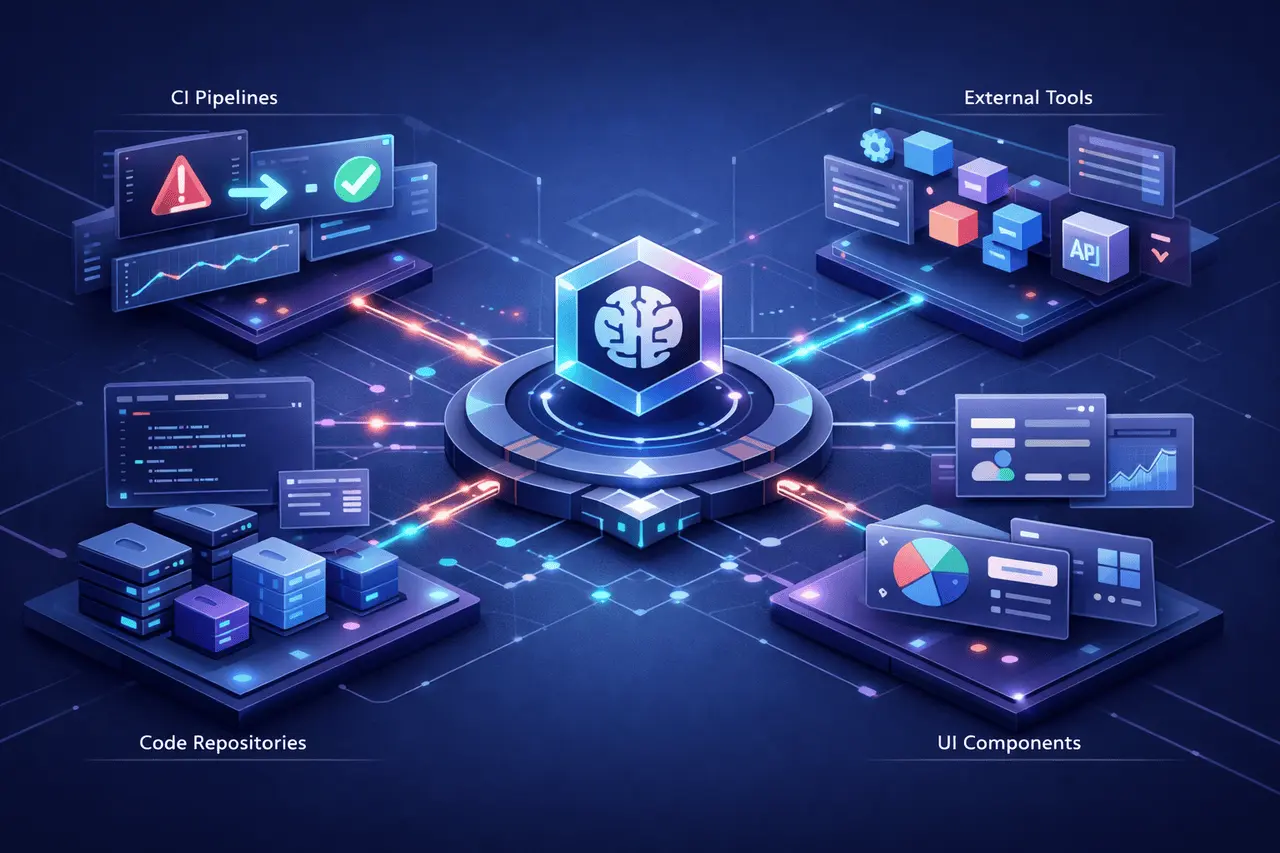
- large code repositories
- multi-hour transcripts
- large datasets and reports
This is particularly valuable for developers, researchers, and enterprise users working with complex information.
Comparison with the previous context limits
| Model | Approximate Context Window |
|---|---|
| GPT-4 | ~8K–32K tokens |
| GPT-4 Turbo | ~128K tokens |
| GPT-5.x generation | Up to 1M tokens |
With this scale, AI can perform deep document analysis and cross-reference large datasets, something that previously required multiple prompts or external tooling.
Native Computer Use Capabilities
Another major addition is native computer use, allowing GPT-5.4 to interact directly with digital environments.
This capability enables the model to perform tasks such as:
- navigating software interfaces
- executing multi-step workflows
- interacting with applications or web interfaces
- managing files or systems
In practice, this turns AI systems into task-executing agents rather than purely conversational models.
Example use cases
- Automating research workflows
- Operating development tools
- Managing digital operations or dashboards
- Running multi-step automation processes
This feature aligns with the growing industry shift toward AI agents capable of completing tasks autonomously.
Improved Knowledge Work and Web Search
GPT-5.4 is also designed to perform better at knowledge work tasks.
Knowledge work refers to tasks involving:
- research
- writing
- analysis
- planning
- technical reasoning
The model reportedly improves performance in:
- long-form reasoning
- complex information synthesis
- web search interpretation
- data summarization
For professionals, this means AI can function more effectively as a research assistant or analytical partner.
Industries that may benefit
- consulting and research firms
- journalism and media
- finance and market analysis
- legal research
- academic work
These improvements make the model particularly suited for information-heavy workflows.
Mid-Response Steering: More Control for Users
GPT-5.4 introduces the ability to steer the model while it is generating a response.
This allows users to:
- redirect the output mid-generation
- clarify instructions
- change tone or direction
- refine complex tasks interactively
This capability improves usability for long or complex outputs, where users may want to adjust the direction without restarting the entire response.
For developers building AI tools, this can lead to more responsive and interactive AI interfaces.
Integration Across ChatGPT, API, and Codex
The rollout of GPT-5.4 is occurring across several OpenAI platforms:
ChatGPT
Users will gradually gain access to the model within the ChatGPT interface, where it can be used for:
- research
- writing
- planning
- technical problem solving
OpenAI API
Developers can integrate GPT-5.4 into applications such as:
- AI copilots
- enterprise automation tools
- AI-powered SaaS products
- internal knowledge assistants
Codex
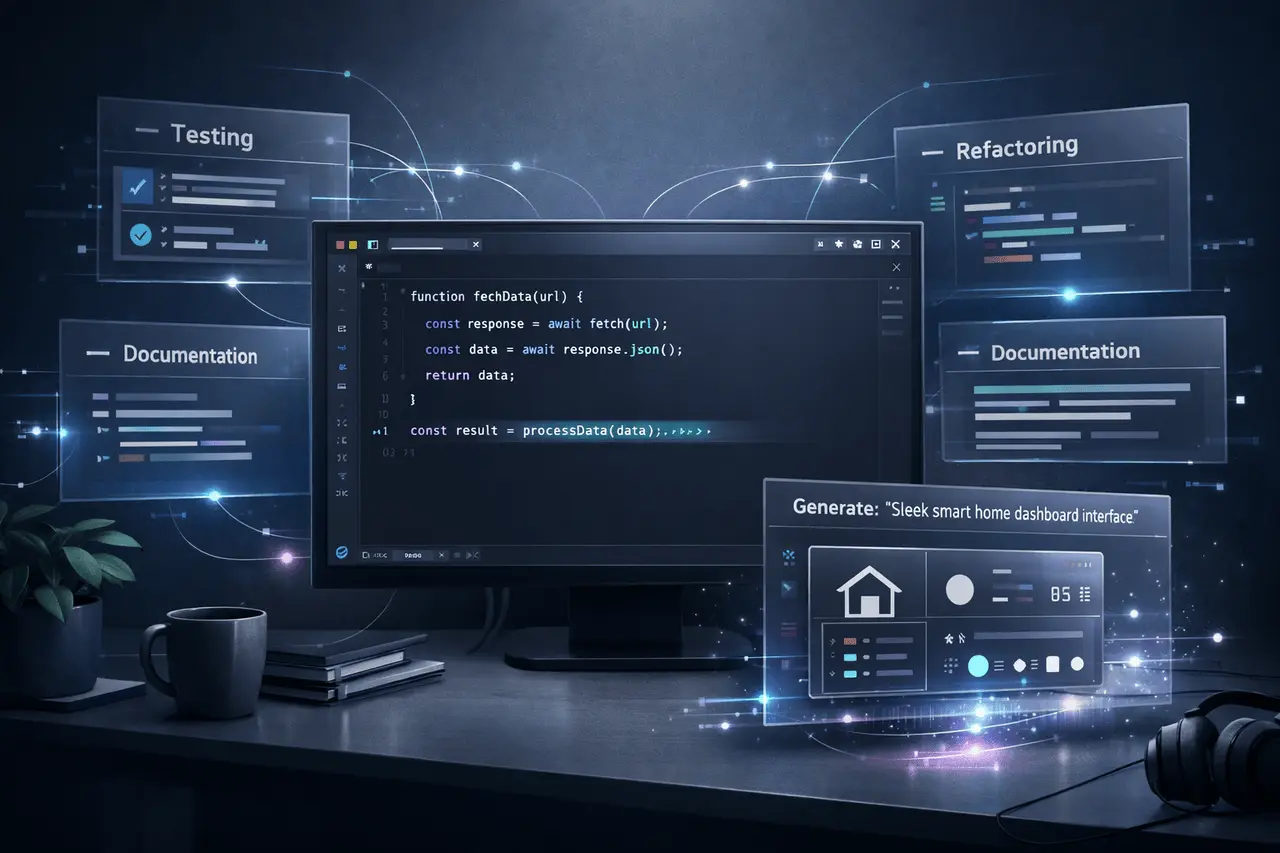
Integration with Codex strengthens its role as an AI coding agent, helping developers with:
- code generation
- debugging
- large-scale repository analysis
- software documentation
Practical Implications for Developers and Businesses
The new capabilities in GPT-5.4 could reshape how AI is used in software and enterprise environments.
Key implications
1. Larger knowledge processing
Organisations can analyse large documents or datasets with a single prompt.
2. AI automation workflows
Native computer use may enable AI to operate tools directly, reducing manual steps.
3. Advanced coding assistants
With large context windows, AI can understand entire codebases instead of isolated files.
4. Research acceleration
Professionals can use AI to synthesise complex information faster.
Potential Limitations and Considerations
Despite its capabilities, GPT-5.4 still faces challenges common to large AI models.
Possible limitations
- Compute cost for large context tasks
- Reliability and accuracy in complex reasoning
- Security concerns for computer-use automation
- Model hallucinations when dealing with incomplete data
Developers may need guardrails and monitoring systems when deploying AI for critical workflows.
GPT-5.4 in the Context of the AI Industry
The launch of GPT-5.4 reflects broader industry trends toward:
- AI agents
- multimodal assistants
- large-context models
- automation-driven AI systems
Other AI companies are also pursuing similar directions with models capable of longer context processing and tool interaction.
These developments suggest the industry is moving toward AI systems capable of managing complex digital tasks with minimal human intervention.
My Final Thoughts
The release of GPT-5.4 marks another major step in the evolution of advanced AI assistants. With its 1 million-token context window, native computer-use capabilities, and improved knowledge-work performance, the model is designed to handle more complex tasks than previous generations.
For developers and businesses, the update opens new possibilities for AI agents, large-scale document analysis, and automation-driven workflows. As AI systems continue to gain a deeper understanding of context and operational capabilities, models like GPT-5.4 are likely to play a central role in shaping the next.
FAQs
1. What is GPT-5.4?
GPT-5.4 is an advanced AI model designed for ChatGPT, the OpenAI API, and Codex. It introduces improvements in knowledge work, web search reasoning, computer use capabilities, and a 1-million-token context window.
2. What does a 1 million token context window mean?
A 1M-token context window enables the AI to process extremely large inputs in a single prompt, such as full books, large codebases, or long research documents.
3. What are the native computer use capabilities?
Native computer use enables the AI to interact directly with software and digital systems, allowing it to complete tasks such as navigating applications and executing multi-step workflows.
4. How does GPT-5.4 help developers?
Developers can use GPT-5.4 to analyse large code repositories, generate code, debug programs, and build advanced AI-powered applications using the OpenAI API.
5. Can users control GPT-5.4 responses while it is generating?
Yes. GPT-5.4 allows mid-response steering, meaning users can adjust instructions or redirect the output while the AI is generating a response.
6. Is GPT-5.4 available in ChatGPT?
Yes. The model is rolling out gradually within ChatGPT and is also available through the OpenAI API and Codex.
Also Read –
GPT-5.2-Codex: Advanced AI Model for Complex Coding Tasks