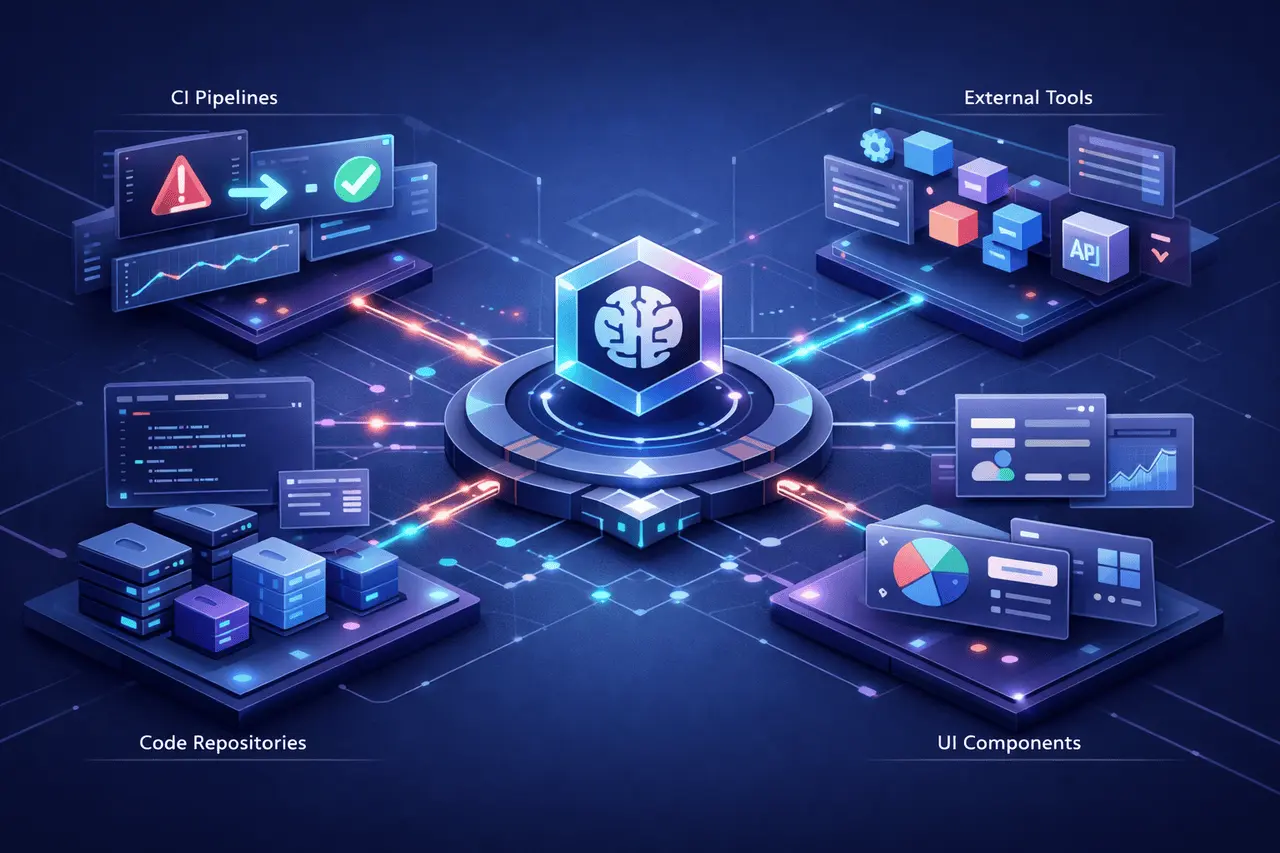


The Codex application is designed to serve as a centralized command center for building, managing, and working with AI agents. It provides teams and developers with a streamlined environment for managing multiple agents, executing tasks in parallel, and running long-running workflows with ease and control. As AI-based systems become an integral part of modern development processes and operations, the Codex app is designed to address the growing need for structured orchestration rather than spontaneous prompt interactions.
From the very first moment you use the Codex app, its goal is obvious: reduce the friction of working with agents and simplify multi-step automation, making it easier to manage. This is crucial, as businesses increasingly depend on AI agents for assistance with code, data processing, research, and other operational tasks.
What Is the Codex App?
The Codex application is designed to serve as a command center for AI agents. Instead of communicating with a single agent in isolation, users can manage multiple agents simultaneously, assign tasks, track each agent’s progress, and collaborate with them over extended periods.
The core of the Codex application focuses on:
- Centralized agent management
- Parallel task execution
- Continuous collaboration on ongoing work
This model reflects how real-world projects work, where tasks aren’t always linear and require coordination across multiple processes.
Why the Codex App Matters?
AI agents are becoming more adept; however, without proper coordination, they could be challenging to control. The Codex application is essential because it adds clarity, structure, and scalability to agents’ workflows.
The primary reasons why it is essential are:
- Operational Clarity: A single workspace reduces context switching.
- Scalability: Managing multiple agents becomes feasible and not chaotic.
- Efficiency: Parallel execution shortens overall task timelines.
- Collaboration Teams collaborate with agents for weeks or days instead of just a few minutes.
As AI adoption expands across research, engineering, and operations, the tools used to manage complexity will become just as crucial as the models themselves.
How does the Codex App work?
The Codex app acts as an interface between the user and AI agents. Instead of issuing commands in isolation, users work through a continuous, logical workspace.
Agent Management
Users can assign, take on, and supervise several agents within a single environment. Each agent is assigned a role or responsibility and can be assigned a specialized task.
Parallel Task Execution
One of the benefits of the Codex application is its ability to operate in parallel. Independent agents can complete tasks simultaneously, which is particularly useful for large, time-sensitive projects.
Long-Running Collaboration
Specific tasks require extensive reasoning, monitoring, or iteration. The Codex application supports long-running tasks, allowing users to return to their ongoing work without losing context.
Core Capabilities Overview
| Capability | Description | Practical Impact |
|---|---|---|
| Centralized workspace | Single interface for all agents | Reduced cognitive load |
| Parallel execution | Multiple agents run tasks at once | Faster project completion |
| Persistent tasks | Ongoing work retains context | Better handling of complex jobs |
| Collaboration model | Users interact with agents over time | Improved reliability |
Real-World Applications
The Codex application applies to a wide range of operational and technical scenarios where agent coordination is essential.
Software Development
- Coordinating agents for the generation of code, testing, and Refactoring
- Analysis and implementation tasks at the same time
- The management of intricate designs or migrating
Research and Analysis
- Agents assigned to research various research angles in parallel
- The aggregation of findings into a single workflow
- Continuity across multiple-day research efforts
Operations and Automation
- Monitoring long-running automation tasks
- managing multiple operational agents with one interface
- Reducing manual oversight for repetitive workflows
Benefits of Using the Codex App
The Codex app offers tangible advantages for teams working with large numbers of AI agents.
- Improved productivity: Parallelism reduces idle time.
- More organized: The clear distinction of responsibilities between agents.
- Improved accuracy: A constant context helps reduce the number of times you have to repeat instructions.
- Alignment of teams: Sharing access to agent activities.
These advantages make the Codex application particularly useful for companies looking to move beyond AI experimentation into production workflows.
Limitations and Practical Challenges
Although the Codex application has advantages in terms of structure, there are practical considerations to keep in mind.
| Area | Consideration |
|---|---|
| Learning curve | Teams must adapt to agent-based workflows |
| Task design | Poorly scoped tasks can reduce effectiveness |
| Oversight | Human review remains necessary for critical outputs |
| Integration | Alignment with existing tools may require planning |
Knowing these limits can help teams use the Codex application more efficiently and also avoid unreasonable expectations.
Codex App vs Traditional Agent Interaction
| Traditional Approach | Codex App Approach |
|---|---|
| Single-agent sessions | Multi-agent coordination |
| Sequential task execution | Parallel task execution |
| Short-lived context | Persistent, long-running context |
| Manual tracking | Centralized visibility |
This comparison demonstrates how the Codex application shifts the use of agents from unstructured interactions to isolated systems.
Practical Considerations for Teams
Before implementing the Codex application, teams should think about:
- Define clear roles for agents and their responsibilities
- Designing tasks that are suitable for parallel execution
- Review and validation procedures
- Users are trained on how to manage the long-running workflows of agents
These steps will ensure the tool provides real value rather than adding complexity.
My Final Thoughts
The Codex application is a real-world improvement in how teams work, leveraging AI agents. Through its role as an agent command center for coordination, it addresses issues related to scale, persistence, and collaboration. Its emphasis on parallel execution of long-running projects aligns with how technological work is done today.
As AI agents become more involved in research, development, and operations, software such as the Codex application will play an essential role in making agent-based systems efficient and well-organized. In the future, the structured orchestration of agents is expected to become an integral component of AI-enabled workflows, rather than an optional feature.
FAQs About the Codex App
1. What exactly does the Codex application do?
The Codex application helps control and coordinate multiple AI agents, enabling concurrent work, permanent tasks, and collaborative workflows in a single environment.
2. What is the Codex application different from one AI agent?
In contrast to single-agent interactions, the Codex app permits multiple agents to collaborate using a shared context and with central control.
3. Does the Codex application handle tasks that run for a long time?
Yes, it’s specifically designed to handle long-running tasks and to allow users to collaborate with agents for extended periods without losing their context.
4. Who is the most benefited from the Codex application?
Researchers, developers, and teams in operations benefit most, particularly those that manage complicated or multi-step AI-driven workflows.
5. Does the Codex application take over the human oversight?
No. Although it can improve efficiency and organization, human oversight and decision-making are still essential to ensure reliability and accountability.
Also Read –
ChatGPT Apps: Features, Use Cases, and How They Work?