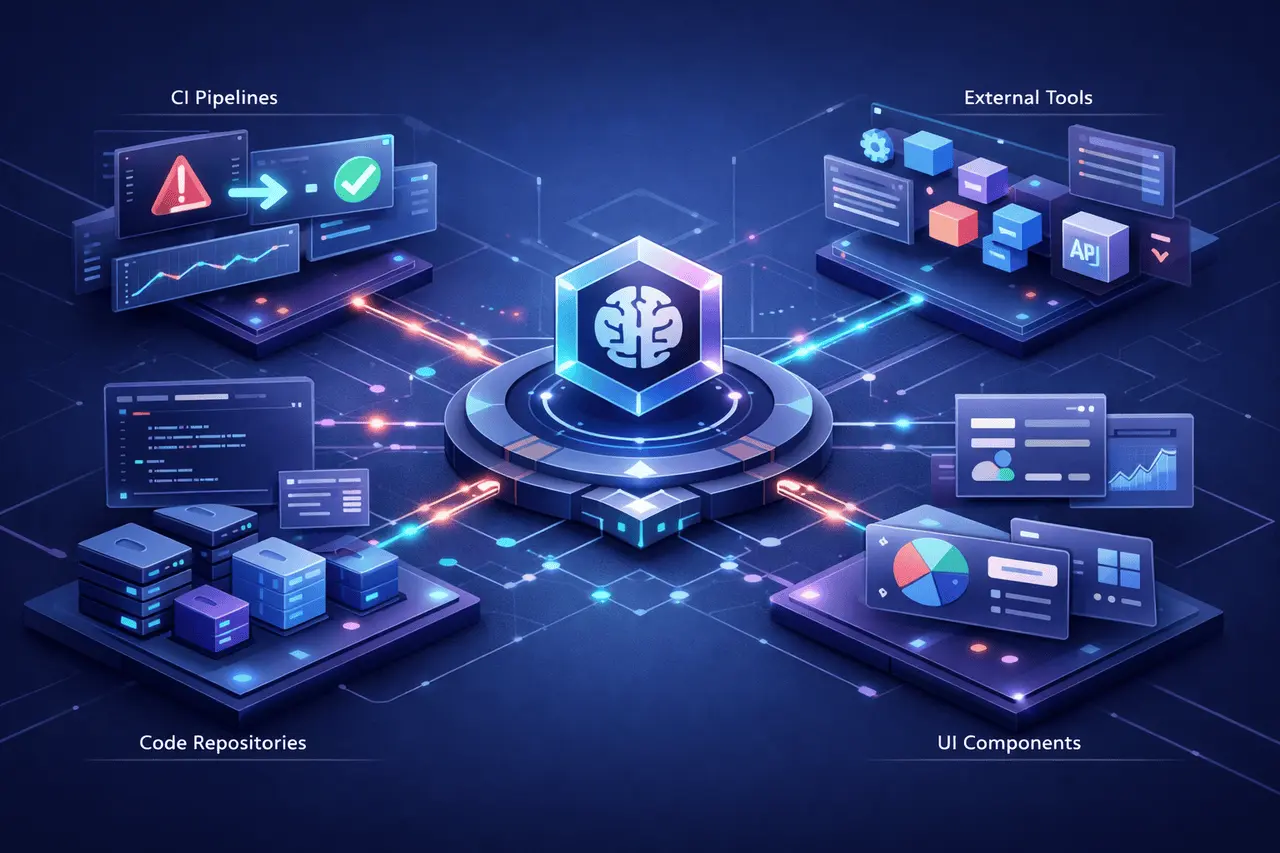


The 0G Apollo Accelerator is an innovative startup program created to help builders build decentralized AI with substantial infrastructure, capital, and mentoring. Supported by research conducted by 0G Labs, the initiative can provide up to $2.5 million in funding per team and up to $200,000 in cloud credits per team, which is accepted.
For entrepreneurs who want to build AI agents and data markets on-chain, DeFi, AI protocols, or cross-chain infrastructure, this accelerator is one of the most capital-intensive programs in the decentralized AI ecosystem.
Key Takeaways
- 0. G Apollo Accelerator offers up to $2 million to each team that is a decentralized AI startup.
- The chosen teams can earn up to $200,000 in Google Cloud credits for their ability to scale AI compute.
- The program is focused specifically on artificial intelligence agents, on-chain DeFi and AI data markets, gaming, cross-chain infrastructure, and decentralized media.
- Created through Blockchain Builders and supported by the leadership of 0G Labs’ ecosystem, as well as the guidance of Stanford-affiliated and Web3 experts.
- It provides high-end wallet infrastructure for enterprises via Privy to ensure smooth Web3 deployment.
- Created to assist founders in developing, building, and scaling their AI applications in a decentralized way, AI applications use a structured Silicon Valley-style guidance.
What is the 0G Apollo Accelerator?
The 0G Apollo Accelerator is a startup accelerator focused on decentralized AI applications and infrastructure. It blends venture-scale funding with cloud-based resources for enterprises and structured mentoring from seasoned blockchain and AI professionals.
The program was developed by Blockchain Builders and led by veterans of Stanford’s blockchain community, participants in 0G Labs’ ecosystem.
Its main goal is clear: empower founders to create, develop, and scale AI-powered, decentralized applications with the same support normally found in Silicon Valley startup ecosystems.
Funding and Infrastructure Support
One of the most distinctive aspects of the 0G Apollo Accelerator is the level of technical and financial backing available to select teams.
Capital and Cloud Credits
Teams that are accepted may be eligible for:
- Up to $2,000,000 in funding per team
- Up to $250,000 in cloud credits for each team
- Access to the production-grade wallet infrastructure
- Enterprise-level compute starting day one
Cloud infrastructure services are offered in conjunction with Google Cloud, providing scalable storage, computing, and AI tools designed to support high-performance applications.
Infrastructure Partnership Overview
| Resource Type | Offering | Strategic Impact |
|---|---|---|
| Direct Funding | Up to $2M per team | Accelerates product development and hiring |
| Cloud Credits | Up to $200K via Google Cloud | Enables scalable AI model training and inference |
| Wallet Infrastructure | Enterprise-grade integration via Privy | Simplifies Web3 onboarding and deployment |
This combination reduces the capital hurdle for AI startups that build on the decentralized infrastructure.
Why Decentralized AI Needs Specialized Acceleration?
Decentralized AI is a blend of two domains:
- Artificial intelligence (models, inference, agents)
- Blockchain-based infrastructure (consensus, data markets, token economies)
Contrary to traditional AI companies that are centralized, decentralized AI projects have to be able to address:
- On-chain data availability
- Cross-chain interoperability
- Token design and incentive alignment
- Scalable inference economics
0G Apollo Accelerator is structured around these realities, guiding experts in blockchain ecosystems and AI commercialization.
Focus Areas for Founders
This accelerator is currently looking for founders who can build in high-growth, decentralized AI areas.
Priority Categories
| Category | Description | Example Application Areas |
|---|---|---|
| AI Agents & Inference | Autonomous agents and decentralized compute | Agent marketplaces, distributed inference layers |
| On-Chain Data Markets | Tokenized or permissionless data exchange | AI training datasets, oracle networks |
| DeFi + AI Protocols | Financial protocols enhanced by AI | Risk scoring, algorithmic treasury management |
| Cross-Chain Infrastructure | Interoperability frameworks | AI services across multiple blockchains |
| Gaming & NFTs | AI-enhanced Web3 gaming economies | Intelligent NPCs, generative asset systems |
| Decentralized Content & Media | AI-driven creator economies | AI co-creation platforms, tokenized IP |
These categories align with broader Web3 and AI convergence trends, in which computation, data ownership, and tokenized incentives intersect.
Mentorship and Ecosystem Support
Beyond financial capital, mentoring is the main focus of 0G Apollo Accelerator’s strategy.
The program contains guidelines from:
- Michael Heinrich, CEO of 0G Labs (Stanford)
- Weisi Yuen (McKinsey, Amazon, Animoca)
- Thomas Yao (IMO Ventures, Stanford GSB)
- Aytunc Yidizli (Avalanche ecosystem)
- Arne Hartmann (General Atlantic, Stanford GSB)
- Other Web3 creators, venture capitalists, and Stanford CS contributors
This ecosystem-driven mentorship offers:
- Product-market fit validation
- Tokenomics strategy refinement
- Fundraising preparation
- Infrastructure architecture support
- Go-to-market guidance
The goal is to recreate a Silicon Valley-style start-up development process for decentralized AI teams across the globe.
How the 0G Apollo Accelerator Works?
While specifics for the program might be changed, the general structure comprises:
- Applicant and the selection procedure
- Participation based on a cohort
- Workshops and mentoring sessions
- Infrastructure onboarding
- Demo or show possibilities
The combination of infrastructure and funding access in the early stages helps to eliminate two of the biggest barriers to decentralized AI computing costs and integration into the ecosystem.
Benefits for Builders
1. Immediate Access to Enterprise Compute
AI learning and training use a lot of resources. Cloud credits provided by Google Cloud enable teams to:
- Train models in scale
- Inference endpoints to deploy
- Agents that run high-throughput AI
2. Reduced Web3 Integration Friction
The support for wallet infrastructure provided by Privy lets teams:
- Embed wallets in a seamless way
- Improve user onboarding
- Deploy production-ready Web3 applications faster
3. Strong Capitalization
A maximum of $2 million per team gives teams runway to:
- Hiring AI and blockchain engineers
- Product iteration
- Audits of security
- Ecosystem expansion
Practical Considerations for Applicants
Founders looking into using the 0G Apollo Accelerator should assess:
- Technically ready for the product
- Requirements for scaling
- Alignment with the decentralized
- A long-term business token, or a strategy for business models
Teams that create solely centralized AI applications without a Web3 or decentralized component might not align with the accelerator’s goals.
Candidates should also prepare the following documents:
- Technical architecture
- Market opportunity
- Competitive positioning
- Roadmap milestones
Potential Challenges in Decentralized AI
While the accelerator reduces barriers to entry, AI that is decentralized is not without structural issues:
- On-chain compute efficiency limitations
- Data privacy concerns
- Uncertainty in the regulation across different jurisdictions
- Token volatility is impacting funding strategies
Solid relationships with experienced infrastructure and mentors can ease the impact, but not eliminate these issues.
Why This Matters for the AI Ecosystem?
A convergence of AI and blockchain technology is altering how data, compute, and value are integrated.
Programs similar to those that use the 0G Apollo Accelerator signal:
- Institutional-grade backing for decentralized AI
- The cloud is becoming more collaborative between service providers as well as Web3 ecosystems
- Achievement of AI-native blockchain infrastructure
If the goal of decentralized AI is to compete with central AI platforms, a robust ecosystem for startups will be vital.
My Final Thoughts
The 0G Apollo Accelerator is an important initiative that is a significant step forward in the decentralization of the AI world. It combines venture-scale financing, up to $200K in cloud credits, wallet infrastructure support, and the guidance of an experienced team of Stanford-affiliated blockchain operators. It will address the most pressing issues that AI-based Web3 startups face.
As decentralized AI evolves, accelerators structured this way could play a significant role in the development of future Generations of AI agents and on-chain data markets or AI-powered algorithms. For builders serious about decentralizing AI infrastructure, the 0G Apollo Accelerator offers both capital and leverage to ecosystems at a crucial time in the industry’s development.
FAQs
1. What is the 0G Apollo Accelerator?
The 0G Apollo Accelerator is a startup program that supports decentralized AI builders. It offers funding of up to $2M, with up to $200K in cloud credit per company.
2. Who is eligible to apply for the 0G Apollo Accelerator?
Founders developing AI agents as well as on-chain data markets, DeFi, AI protocols, cross-chain infrastructure, gaming, NFTs, or decentralized media projects that align with the decentralized AI.
3. What kind of infrastructure support is included?
Teams selected for credits for cloud storage from Google Cloud and wallet infrastructure assistance from Privy, along with the funding and mentoring.
4. How much money does each team receive?
The funding amount can be as high as $200,000 per group, contingent on the selection criteria and the program’s structure.
5. Are these focused on central AI startups?
No. The program is designed for use in decentralized AI infrastructure and AI-powered Web3 applications.
Also Read –
Doc-to-LoRA and Text-to-LoRA: Faster LLM Customization