
A future for autonomous transport is dependent on more than just self-driving software. For robotaxis to achieve global scale, they need to operate without human intervention and maintain near-continuous uptime. This vision is guiding Tesla’s next-generation robotaxi design, the Cybercab, which is being developed without a conventional charging port. Instead, the vehicle charges wirelessly via inductive charging pads embedded in the ground.
This design option signifies a change in how electric cars (EVs) are expected to be used, as fully autonomous fleets. By eliminating cables, connectors, and manual actions, Tesla Robotaxi aims to create an environment where robotaxis can remain on the road longer, reduce operational friction, and operate in a fully autonomous manner throughout the day.
Cybercab was Designed to be an Autonomous Fleet
Tesla’s robotaxi concept, called the Cybercab, is designed for autonomous ride-hailing, not private ownership. In contrast to conventional EVs that assume drivers plug into a home charger or a public charging station, the Cybercab is specifically designed for fleet use.
At the heart of this strategy is a basic idea: if no human being is needed to operate the vehicle, then no one is required to charge it. By removing the charging port entirely, Tesla removes one of the most critical physical requirements that could impede completely autonomous operation.
Does the Wireless Charging Method Work?
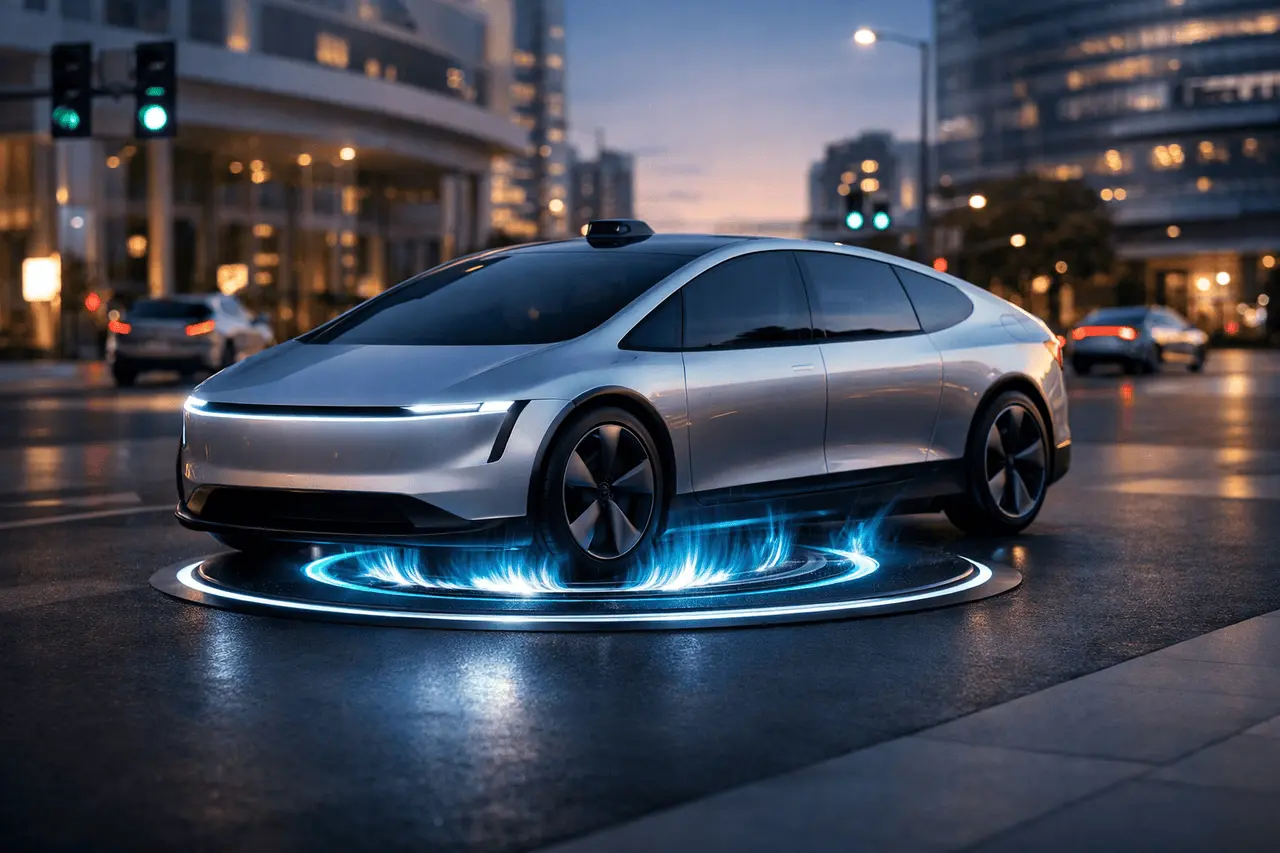
Wireless charging for electric vehicles relies on inductive power transfer. In this method, the charging pad that is placed on the ground creates an electric field. A receiver coil mounted beneath the vehicle converts that field into electricity to charge the battery.
For the Cybercab, Tesla plans to use inductive charging pads in parking spaces or designated fleet hubs. The car would park itself on the pad, align, and begin charging. No cables, plugs, or human involvement are required.
This technology is currently used in limited pilot programs for fleet vehicles and buses; however, Tesla plans to make it available on a larger scale for self-contained taxis.
Targeted Performance Acceleration and Efficacy
Based on Tesla’s stated goals, Cybercab’s wireless charging system was specifically designed to:
- Speeds of charging that can reach 25kW
- Efficiency exceeding 90%
- hands-free, completely self-contained operation
Although 25 kW is less than the high-powered DC rapid charging, it is in line with the requirements of the robotaxi fleets. Autonomous vehicles can charge during rides or during idle periods, rather than waiting for a full recharge.
The charging system’s efficiency is crucial. Wireless charging has often been criticised for its energy loss; however, efficiency levels of 90% will enable inductive charging on a large scale.
Why Disconnecting the Port for Charging? Is Port Important?
Removal of charging ports is not just an aesthetic idea; it solves operational issues that autonomous fleets face.
1. True Autonomy
A charging port is a connection point for robot or human cables. Wireless charging eliminates reliance on a charging station and allows the vehicle to manage its own energy requirements.
2. Minimized Wear and Maintenance
Metal connectors can be vulnerable to vandalism, wear, dirt, or weather exposure. A sealed vehicle without ports reduces maintenance costs and increases long-term reliability.
3. Faster Turnaround Time
Robotaxis do not have to wait at charging stations or wait for assistance from a human. They can charge, park, and return instantly, increasing fleet efficiency.
4. Simplified Infrastructure
Inductive pads can be positioned in areas prone to traffic, such as fleet locations, parking areas, parks, or depots. This helps reduce clutter and simplify urban charging arrangements in comparison to cable-based charging systems.
Created for High Uptime and continuous operation
Tesla’s robotaxi strategy is based on uptime, which is the amount of time when vehicles are creating revenue and generating rides. Wireless charging helps with this by enabling brief, frequent charging sessions instead of lengthy downtimes.
In the real world, a Cybercab could recharge its battery while waiting for its next rider, during off-peak hours, or during scheduled trips. This strategy aligns with fleet economics, as battery use directly affects profitability.
By designing the vehicle around autonomy-first concepts, Tesla is signaling that Cybercab isn’t an electric vehicle without an operator; it’s a specifically designed node in an autonomous transportation network.
The implications of infrastructure for Cities
If implemented on a larger scale of wireless charging robotaxis, it could affect how cities design electric vehicle infrastructure. Instead of rows of plug-in charging stations, urban areas could incorporate charging stations into taxi stations, parking spaces, and mobility hubs.
This design could minimize visual clutter and enhance accessibility, and create better streetscapes. However, it will require prior investment and thorough standards to guarantee interoperability and security.
Tesla Robotaxi: Open Questions and Challenges
Despite its potential, it is still facing real-world problems:
- Standardization: Wireless charging technology varies across brands, but widespread adoption might require common standards.
- Costs of installation: Inductive pad installation on parking areas or roads involves infrastructure construction and upgrades.
- Management of Energy: Coordination of thousands of autonomous charging vehicles will require sophisticated grid integration.
Tesla does not publicly announce deployment timeframes or locations. These factors can affect how quickly these systems will expand.
What does it do to the future of Electric Vehicles?
The Cybercab’s portless design demonstrates an overall shift of EV thinking, moving from the convenience of the driver to a more efficient fleet. While many automobiles will use plug-in charging in the next few years, autonomous fleets could utilize completely different energy-related workflows.
If it is successful, Tesla’s strategy could alter expectations for robotaxis and accelerate the path towards hands-free, fully self-contained mobility.
My Final Thoughts
Tesla’s Cybercab concept demonstrates how autonomy can alter the entire design of vehicles, including charging. By removing the charging port and relying on charging pads with inductive technology, Tesla aims to eliminate downtime, reduce maintenance, and enable fully automated fleet operations.
Whether this concept becomes a norm depends on the infrastructure’s preparedness, regulatory support, and real-world performance. However, the idea of a robotaxi charging its own battery without plugs, humans, or pauses offers an intriguing glimpse into the near future of transport.
Frequently Answered Questions (FAQs)
1. Why doesn’t Tesla’s robotaxi come with charger ports?
Cybercab is designed for complete autonomy. Wireless charging eliminates the need for human intervention and enables continuous fleet operation.
2. What is the method by which Cybercab recharges, without plugging in?
It uses inductive charging pads embedded in the ground, the car parks on the pad, and wirelessly charges.
3. Does wireless charging take longer than plug-in chargers?
Yes, however, Tesla is aiming for approximately 25 kW. This will suffice for the frequent quick charging sessions common in the robotaxi fleets.
4. Is wireless charging effective enough to handle large fleets?
Tesla aims for 90% or more efficiency. This will allow it to be used for high-volume autonomous operation.
5. Is this technology accessible to regular Tesla automobiles?
There isn’t a confirmed plan. Cybercab is explicitly designed for fleets to use autonomously rather than for private ownership.
6. When will Tesla’s roboticaxi with wireless charging be in use?
Tesla hasn’t provided a specific deployment date, and the timeline will depend on regulatory approvals and infrastructure development.
Also Read –
OpenAI for Healthcare: HIPAA-Compliant Clinical AI
Microsoft Copilot Checkout: In-App Payments with Stripe & PayPal